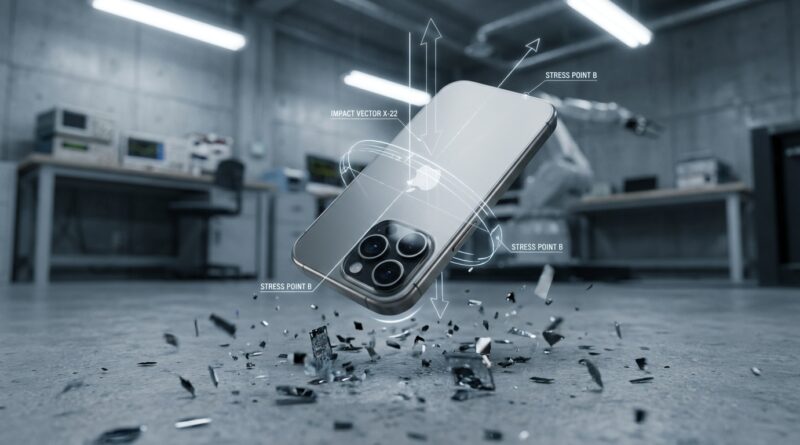
iPhone 18 Pro ‘Drop-Test Hack’: The Tata Video Leak That Quietly Confirms Apple’s Toughest Glass Yet
You are not crazy for skipping the chip charts and asking the real question. Will the iPhone 18 Pro survive the kind of dumb, everyday drops that wreck so many perfectly good phones? If you cracked an iPhone 15 or 16 from a pocket slip, a kitchen counter bounce, or that awful pavement corner hit, Apple’s usual “our toughest glass ever” line probably does not mean much anymore. That is why this new iPhone 18 Pro drop test leak matters. The leaked Tata factory clips are not a full lab-grade verdict, but they do show something more useful than keynote language. They suggest Apple has changed both the glass stack and the phone’s edge geometry in ways that may reduce the ugly corner-first failures that usually turn into expensive repair bills. The short version is simple. No, the iPhone 18 Pro is not unbreakable. But yes, this leak quietly points to the biggest real-world durability step Apple has made in a while.
⚡ In a Hurry? Key Takeaways
- The iPhone 18 Pro drop test leak suggests better corner and face-down survival than recent Pro models, but it is still glass and can still crack.
- If you hate bulky cases, the smarter play is a thin grippy case plus screen protector, not full caseless confidence just yet.
- The biggest value here is not raw toughness. It is that the 18 Pro may better survive the everyday drops that actually happen.
What the iPhone 18 Pro drop test leak appears to show
The leaked clips, said to come from Tata-linked pre-release handling and test footage, are short and far from perfect. That matters. We are not looking at a certified teardown lab or a controlled engineering report.
Still, even rough leaks can tell us a lot if you watch the right details. In the clips making the rounds, the iPhone 18 Pro appears to take repeated low-to-mid height drops onto hard surfaces with less visible damage than many people would expect from a current Pro iPhone. The most interesting part is not the front glass itself. It is how the device seems to handle edge and corner contact.
That is where phones usually lose the fight.
Why corner hits matter more than marketing words
Most broken phones do not land perfectly flat like a lab test ad. They catch a corner, twist, then transfer force into the frame and glass all at once. That is when tiny cracks become spiderwebs.
In the leak, the 18 Pro seems to spread that force a little better. The frame and glass transition looks slightly more forgiving than the sharper, flatter feel seen on some recent models. That does not sound dramatic, but in drop physics, small shape changes can make a big difference.
What likely changed from the iPhone 16 and 17 designs
If the leak is real, this does not look like a miracle new material that rewrites physics. It looks more like Apple making a few smart durability tweaks at the same time.
1. Slightly revised edge geometry
The side profile appears to soften impact transfer a bit. Think less of a hard glass-to-metal stress point and more of a rounded force path. If true, that would help on table slips and hip-height drops.
2. Better glass compression behavior
Apple’s glass gains are often about resisting crack spread, not avoiding every mark. The 18 Pro may still scuff or chip, but the leak suggests it is less likely to turn one impact into a full front-panel disaster.
3. A sturdier frame-to-glass relationship
This is the quiet part most buyers miss. Stronger glass is only half the story. If the frame flexes in a more controlled way, the glass gets a better shot at surviving. That seems to be the big clue here.
So, is it actually less fragile?
Based on the leak, yes, probably. But only in a normal-human sense.
That means better odds against pocket drops, bedside-table slides, coffee-shop chair fumbles, and parking-lot slips. It does not mean you should start juggling it over concrete.
If your main frustration with older iPhones is that one stupid drop can end your month, the 18 Pro looks more promising than the 15 or 16 series did in early durability chatter. It may also beat the 17 series if Apple really did refine both the outer glass and the impact path through the frame.
What this means for people who want to go case-free
This is the question people really care about, even if they pretend they are comparing GPU cores.
Can you run the iPhone 18 Pro without a case?
Maybe. More safely than before, probably. Recklessly, no.
Best practical advice
If you love the feel of a naked iPhone, the smart middle ground is a very thin case with grip and a good screen protector. That setup protects against the most common accidents without turning the phone into a brick.
If you are rough on phones, work outdoors, or have a habit of dropping your device while getting out of the car, this leak is not your permission slip to go caseless.
And if battery life matters as much as durability, it is worth also reading iPhone 18 Pro ‘Battery Vault Hack’: The Quiet 5,500mAh Leak That Finally Fixes Apple’s Biggest Travel Nightmare, because a tougher phone is even more useful if it can also get through a long travel day without panic charging.
How much faith should you put in a leaked test?
A healthy amount, not blind trust.
Leaks can be cropped. Angles can hide damage. Test surfaces can vary. A phone can survive three lucky drops and fail on the fourth. So do not treat this as final proof that Apple solved fragility.
But the iPhone 18 Pro drop test leak does seem consistent with a believable engineering story. We are not seeing magic. We are seeing signs of a phone that may be better tuned for real-world abuse.
What to watch for next
Once review units get into independent hands, look for three things:
Front-glass performance on face-down drops.
Corner survival on concrete.
Whether the back glass has improved too, or if Apple mostly focused on the front and frame.
Who should care most about this leak
This matters most if you are holding onto a cracked 15 or 16 and wondering whether Apple finally made a Pro phone that feels a little less nerve-racking to own.
It also matters if you hate thick cases. A lot of buyers do not want a military-grade shell. They just want to stop living one bad sidewalk bounce away from a repair appointment.
For those people, this leak is more useful than another benchmark chart. It speaks to daily life.
At a Glance: Comparison
| Feature/Aspect | Details | Verdict |
|---|---|---|
| Corner-drop resilience | Leak suggests the 18 Pro handles edge and corner impacts better than many 15/16-era failures, likely due to frame and edge-shape tweaks. | Most meaningful improvement |
| Face-down glass survival | Visible signs point to stronger front-glass performance in short drops, though not enough proof yet for “caseless and fearless.” | Promising, but wait for full tests |
| Case-free confidence | Better durability may allow lighter cases for many users, but concrete and bad angles can still ruin your day fast. | Thin case recommended |
Conclusion
If you have been drowning in A20 talk, AI features, and supply-chain drama, this is the useful part to pay attention to. The iPhone 18 Pro drop test leak does not prove the phone is indestructible, but it does point to practical changes that matter in real life. Better edge geometry, smarter force handling, and what looks like tougher glass could make the 18 Pro a noticeably safer bet for pocket drops, table slips, and curbside accidents than the 16 and maybe even the 17 series. That is the kind of upgrade regular people actually feel. More importantly, it gives you a clearer way to decide whether a slim case is enough, or whether going case-free is finally realistic for your habits. That is a much better buying question than “is the A20 fast,” because the speed only matters if the phone survives the fall in the first place.