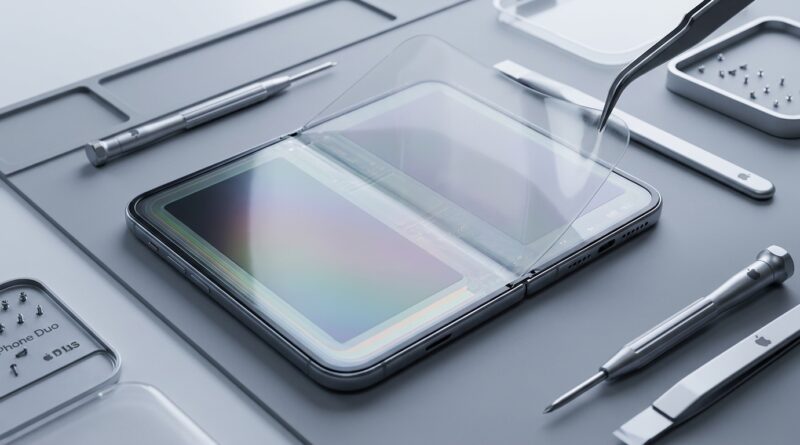
iPhone Duo ‘Display Swap Hack’: The Quiet Foldable Screen Leak That Changes How You Actually Plan For Burn‑In And Creases
You are not being paranoid if the iPhone Duo’s inner screen is the one thing making you hesitate. Foldables are fun right up until you picture a faint crease getting worse, a scratched soft layer catching the light, or burn-in showing up just after AppleCare ends. That fear matters because first-generation foldables are expensive, and nobody wants to spend close to laptop money on a phone they feel scared to actually use. The interesting part of the latest iPhone Duo replaceable inner display leak is that it may change the ownership math. If Apple really plans to let service centers swap the inner display cover layer without replacing the whole folding panel assembly, that is a very different risk than what most people have been bracing for. Think less “catastrophic screen surgery” and more “wear-item refresh.” It would not make the Duo cheap to repair, but it could make it a lot easier to own, enjoy, and later sell.
⚡ In a Hurry? Key Takeaways
- The leak suggests Apple may let technicians replace the iPhone Duo’s inner display top layer or cover stack, instead of forcing a full inner panel replacement every time wear shows up.
- If you plan to preorder, budget for AppleCare and choose a slim case that protects the hinge and outer shell, not one that adds pressure to the fold.
- This matters for resale. A serviceable inner layer could reduce long-term fear around scratches, crease wear, and mild burn-in, but it will not make the Duo indestructible.
Why this leak matters more than the launch specs
Most launch coverage focuses on the obvious stuff. Size. Cameras. Battery. How thin it feels. Those things matter, sure. But if you are buying a foldable, the real question usually shows up later. What happens after 18 months of normal use?
That is why this leak lands differently. A foldable does not age like a regular slab phone. The inner screen is softer, more complex, and more likely to show wear over time. If Apple has found a way to treat part of that inner display assembly as a replaceable service layer, that lowers the emotional cost of ownership.
And yes, emotional cost is real. People baby expensive foldables because they are not sure which marks are harmless and which ones turn into a four-figure repair bill.
What the “display swap hack” likely means in plain English
The word “hack” makes this sound shady. It probably is not. In practical terms, the leak points to Apple designing the inner display in layers, with at least one wear-prone top section that can be replaced separately during service.
That is a big deal.
On a foldable, the visible screen experience is not just the OLED underneath. It is also the protective top structure you touch every day. If that upper stack can be peeled off and replaced by a trained technician, Apple may be able to fix common aging issues without throwing out the whole inner screen assembly.
What could be replaceable
Based on how foldables are generally built, the likely replaceable part is not the entire flexible OLED itself. More likely, it is the protective cover layer, top film stack, or another sacrificial section designed to take the abuse from fingers, dust, and repeated folding.
Think of it like replacing worn tires instead of changing the whole car suspension.
What probably would not be covered by this
If the OLED beneath is physically damaged, develops dead zones, or the hinge causes structural issues, you are likely back in full-repair territory. A replaceable top layer helps with wear and tear. It does not magically erase major damage.
How this changes your burn-in and crease worries
Let’s separate three different fears, because people often lump them together.
1. Scratches and surface wear
This is the easiest one to understand. Foldable inner screens are more delicate than standard glass screens. Tiny marks can happen even when you are careful. If Apple can refresh the top layer, surface wear becomes less of a forever problem.
2. Crease visibility over time
Every foldable has a crease. The real issue is whether it gets more obvious, catches reflections, or becomes distracting. If some of that visual aging comes from the top protective stack rather than the panel itself, a service swap could make an older Duo feel newer again.
3. Burn-in
This one needs a little caution. Burn-in happens at the OLED level, not just on the top surface. So a replaceable outer layer would not fully “fix” true OLED burn-in if the pixels themselves have aged unevenly.
But it can still help the way the screen looks overall. Sometimes what people describe as “burned in” is really a mix of panel aging, top-layer wear, and light distortion around the crease. Replacing the top stack may improve perceived screen quality even if it does not reverse every underlying pixel issue.
What this could mean for repair costs
Apple has not confirmed pricing, so nobody should treat exact numbers as fact yet. Still, the service logic is pretty straightforward.
A full inner display replacement on a foldable is the nightmare scenario. It is the most expensive part, the most complex repair, and the one that can make resale math ugly fast.
If Apple instead offers a “cover stack” or “inner top layer” replacement, expect something that is still pricey, but much cheaper than a full panel swap.
A realistic cost range to keep in mind
For planning purposes only, a top-layer service might land somewhere in the “painful but survivable” zone, rather than the “why did I buy this phone” zone. Think hundreds, not necessarily well over a thousand. That is the difference this leak hints at.
If you are deciding whether to preorder, that gap matters more than almost any benchmark score.
Downtime could matter just as much as price
The other overlooked piece is time. Full foldable repairs can mean parts delays, shipping, and being without your phone longer than you want. A more modular service option could reduce turnaround time, especially in major cities with Apple Stores or authorized repair centers that get parts quickly.
That makes the Duo feel less like a fragile luxury item and more like a device you can actually live with.
Should you still buy AppleCare?
Yes. If you are buying a first-generation foldable from anyone, AppleCare is still the sane move.
This leak does not mean “skip protection.” It means you may not need to panic about every tiny sign of aging. There is a difference.
Who absolutely should get AppleCare
If you keep phones for more than two years, commute with them daily, have kids, travel a lot, or know you are hard on devices, just get it. The Duo is exactly the kind of product where one bad moment can erase the savings from trying to self-insure.
Who might think twice
If you upgrade every year and treat your phones gently, you could argue that AppleCare is less critical. But even then, on a foldable, the resale angle makes coverage easier to justify.
Buyers of used foldables care a lot about screen condition. Anything that helps you maintain or document that condition helps your future selling price.
Case choice matters, but maybe not the way you think
People often assume the thickest case is the safest case. On foldables, that is not always true.
You want hinge protection and edge protection. You do not want a case that adds weird pressure, traps grit, or makes the device awkward enough that you start handling it badly.
Good case advice for the Duo
Pick a slim, well-fitted case from a reputable brand. Prioritize hinge shielding if available. Make sure the inner lips do not press against the folding screen area when closing. And keep the phone clean. Dust and grit are the enemy of anything that folds.
What not to do
Do not add random third-party screen films to the inner display unless Apple explicitly says they are safe. Foldables are picky. A bad accessory can create more problems than it solves.
What this means for resale value
This is where the iPhone Duo replaceable inner display leak could really change buyer behavior.
Resale value tanks when used buyers assume one thing. “If the inner screen looks tired, I am buying someone else’s problem.”
But if Apple normalizes a replaceable wear layer, then an older Duo with documented service history becomes easier to trust. A refreshed inner layer before trade-in or resale could make a huge difference in buyer confidence.
How to protect future trade-in value
Keep receipts for any service. Use Apple or authorized repair only. Take clear photos of the screen condition while it is still in good shape. And do not ignore minor issues for too long if they are likely to affect trade-in grading later.
The best time to preserve resale value is before the screen looks rough, not after.
Should you “use it normally” or baby it?
If this leak is accurate, the answer moves closer to normal use.
Not reckless use. Normal use.
That means enjoying the bigger canvas, using split-screen apps, reading on it, watching video, and actually folding and unfolding it without guilt. A foldable that lives half its life closed because the owner is scared is not much of a win.
Smart habits still matter
Keep sharp debris out of your pocket. Do not press hard on the inner screen. Do not leave bright static content parked for hours if you can help it. And avoid cooking the phone in direct heat.
The leak softens the downside. It does not repeal physics.
What to watch for before preordering
If preorders are about to open, here are the three things worth waiting to confirm.
1. AppleCare terms for the inner display
This is the big one. If Apple specifically recognizes top-layer wear service, that is your clearest signal the leak was on the right track.
2. Out-of-warranty service pricing
Even a rough price sheet would help. There is a huge practical difference between a $249 service and a $799 one.
3. Trade-in inspection standards
If Apple becomes more lenient on mild crease or surface wear because the layer is serviceable, that would be a quiet but meaningful change.
At a Glance: Comparison
| Feature/Aspect | Details | Verdict |
|---|---|---|
| Inner screen serviceability | Leak suggests the wear-prone top layer may be replaceable without swapping the full foldable display assembly. | Very promising if confirmed. It lowers long-term ownership risk. |
| Burn-in and crease anxiety | A replaceable top stack may improve appearance and wear, but true OLED burn-in may still require more serious repair. | Helpful, but not a miracle cure. |
| Buying advice before preorder | Plan for AppleCare, use a clean slim case, and watch for official repair pricing and trade-in rules. | Best move for cautious early buyers. |
Conclusion
If you have been curious about the Duo but quietly worried the inner screen would age like a carton of milk, this leak is the first thing that genuinely changes the conversation. A serviceable inner display cover layer would not make the phone cheap, and it would not make the foldable screen invincible. But it could make ownership feel a lot less risky. That matters right now because preorders are near, and serious buyers are trying to decide how much protection to buy, what kind of case to use, and whether they can enjoy the foldable experience without wrecking long-term value. If Apple treats screen wear more like a tire change than an engine rebuild, the Duo becomes easier to recommend to real people, not just gadget collectors. That is the useful part of this leak. It gives you a better way to plan, not just another reason to gawk at a launch event.