iPhone Ultra ‘Liquid Hinge Hack’: The New Foldable Leak That Quietly Fixes Apple’s Biggest Crease Problem
Foldables are exciting right up until you see that crease. Or worse, start wondering if the hinge will feel loose and tired before you finish paying the thing off. That is the real problem with every foldable rumor. It is not whether Apple can make one. It is whether Apple can make one people trust. The latest foldable iPhone Ultra liquid metal hinge leak matters because it points to a quieter fix. Less about flashy features, more about the boring engineering stuff that decides whether a foldable still feels premium after a year or turns into an expensive compromise.
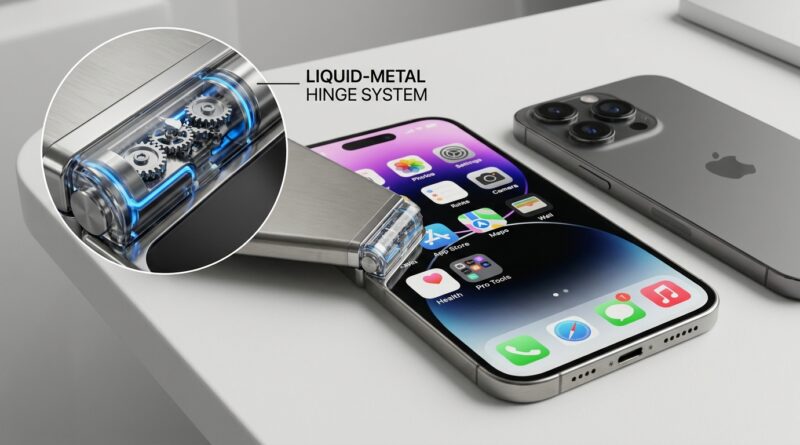
According to recent reports, Apple is testing a hinge that may use liquid metal components to cut wear, improve rigidity, and help the display fold with less visible stress at the center. Pair that with talk of a higher fold-cycle target and a near-flat crease, and this stops sounding like wishful thinking. It starts sounding like Apple trying to solve the two things buyers actually care about. Durability and looks.
⚡ In a Hurry? Key Takeaways
- Apple’s latest foldable iPhone Ultra liquid metal hinge leak suggests the company is focusing on reducing crease visibility and hinge wear, not just making a foldable for the sake of it.
- If your current phone is still fine, this leak gives you a real reason to wait and watch rather than rush into today’s foldables.
- Do not treat first leaks as a buying signal yet. Even smart hinge design cannot guarantee first-gen perfection or a lower price.
Why this leak actually matters
We have had years of foldable iPhone chatter. Most of it was vague. Apple is exploring this. Apple is testing that. Nice for rumor fans, not useful for regular buyers.
This time is different because the conversation is shifting from concept to mechanics. Hinges are the whole game in foldables. The display gets the attention, but the hinge decides how tightly the phone closes, how much dust gets in, how the screen bends, and how ugly that center crease becomes over time.
If Apple is really using liquid metal in part of the hinge system, the idea is simple. You use a material known for strength and wear resistance in key stress points. That can help the hinge keep its shape and feel over thousands of opens and closes.
What “liquid metal” means in plain English
No, your phone would not be full of sloshing silver goo.
“Liquid metal” in gadget leaks usually refers to a metal alloy that can be molded very precisely and is prized for being strong and resistant to deformation. Apple has danced around this material before in patents and small parts. In a foldable hinge, that matters because tiny parts take repeated stress every single day.
Why that could help
A foldable hinge has a rough life. Open. Close. Pocket lint. Heat. Tiny twists. More opening and closing. If the hinge loosens, the display can bend less evenly. That can make the crease more noticeable and the whole phone feel less expensive.
A stronger hinge material could help Apple in three ways:
- Keep the fold action more consistent over time
- Reduce wear in the moving parts
- Support a display shape that hides the crease better
The crease problem is still the biggest problem
Let’s be honest. Most people do not obsess over fold-cycle numbers. They notice the crease in five seconds.
That center line is the thing that makes foldables feel like a compromise. Some users get used to it. Others never stop seeing it. Apple knows this. If the company enters the foldable market, it probably cannot get away with a “good enough” crease and still sell the usual premium Apple story.
That is why the near-flat crease talk matters. It suggests Apple may be trying to give the display more room to bend gently rather than forcing a tighter fold that leaves a deep visible line. A better hinge can make that possible.
Near-flat does not mean invisible
This part is important. “Near-flat” is not the same as “no crease.” Every folding display has physics to deal with. The real question is how visible it is in normal use, how much you feel it under your finger, and whether it gets worse after a year.
If Apple can keep the crease shallow and stable over time, that may be enough for many buyers.
Higher fold-cycle targets sound boring, but they matter
Leaks also point to Apple aiming for stronger durability targets. Again, not sexy. Very important.
Fold-cycle ratings tell you how many times a device can open and close before the manufacturer expects serious wear issues. In the real world, a phone opened 100 times a day hits 36,500 folds in a year. That adds up fast.
So if Apple is aiming higher than rivals, that tells us one thing. The company knows buyers will judge a foldable iPhone much harder than they judge a regular iPhone. And they should. A premium foldable has to survive daily use without becoming a stress test you carry in your pocket.
Should you wait for Apple or buy a foldable now?
This is where the leak becomes useful.
Wait for Apple if you care most about polish
If you are the kind of buyer who keeps a phone for four or five years, Apple’s slower approach may actually be the smart one. The company often arrives late, but it tries to sand down the rough edges before mainstream buyers jump in.
If your biggest fear is hinge wear, crease depth, and long-term durability, this leak supports the idea that waiting could pay off.
Buy a Samsung Z Fold now if you want the experience today
Samsung has a huge head start. Its foldables are real, mature, and improving every year. If you want a big-screen foldable right now and you are comfortable with some trade-offs, the Z Fold line remains the obvious alternative.
Just go in with open eyes. You are buying into a category that is better than it used to be, not perfect.
Skip first-gen Apple if you hate risk
Even if Apple nails the hinge, first-generation hardware is still first-generation hardware. Price will likely be high. Repairs may be painful. And there may be quirks no leak can predict.
If you are cautious, the best move may be to wait for Apple to release one, let early adopters test it for six months, then decide.
What this leak does not tell us yet
There are still big unknowns.
- Actual price, which could easily be eye-watering
- Screen size and aspect ratio
- Battery life, which is always tricky in foldables
- Repair cost and parts availability
- Whether Apple can really make the crease meaningfully better than rivals
So yes, this is promising. No, it is not a victory lap.
The practical decision framework
If you are trying to stop doomscrolling rumors and make a real plan, use this simple filter.
Hold your current phone if:
- Your phone still works well
- You want the best chance at a more durable foldable
- You care more about long-term fit and finish than being first
Buy a current foldable if:
- You want tablet-style multitasking now
- You accept some crease and durability compromise
- You are comfortable upgrading again in a couple of years
Skip the first-gen foldable iPhone if:
- You never buy version one products
- You want lower prices and easier repairs
- You would rather wait for Apple to refine the category
At a Glance: Comparison
| Feature/Aspect | Details | Verdict |
|---|---|---|
| Liquid metal hinge | Could improve strength, reduce wear, and help maintain tighter tolerances over time | Promising if true, but still unconfirmed in a shipping product |
| Near-flat crease | Suggests Apple is aiming to reduce the visible center line and improve the feel of the display | Potentially the biggest buyer-friendly upgrade |
| Higher fold-cycle durability | Could mean better long-term reliability for heavy daily use | Important, but real-world testing will matter more than marketing numbers |
Conclusion
For the first time in a while, the foldable iPhone story feels less like wishful chatter and more like product planning. That is the value of this foldable iPhone Ultra liquid metal hinge leak. It gives us something concrete to judge. If Apple is really building around a tougher hinge, higher fold-cycle targets, and a near-flat crease, then the company is at least aiming at the right problems. That gives buyers a smarter way to decide what to do next. Hold onto your current iPhone a little longer, jump to a Samsung Z Fold if you want the foldable life now, or skip Apple’s first try and wait for version two. Either way, you no longer have to read every rumor like tea leaves. You can start judging the leaks by the engineering, and that is a much better way to plan your next expensive phone.