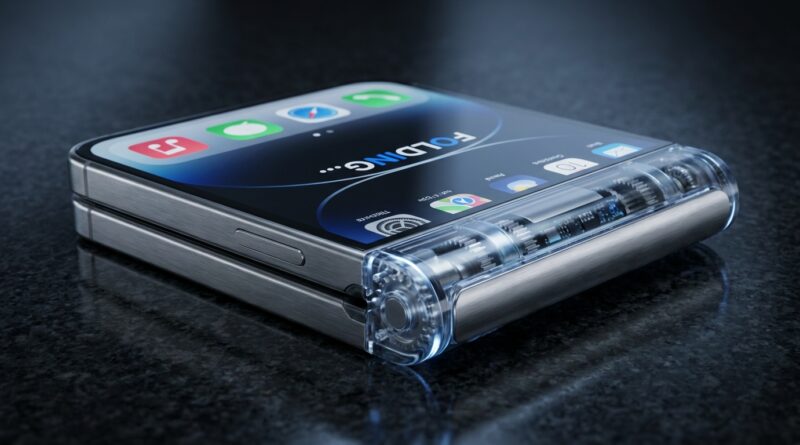
iPhone Ultra ‘Crease-Free Screen Hack’: The Quiet Hinge Leak That Changes Whether You Trust Apple’s First Foldable
If you have ever looked at a foldable phone in a store and immediately stared at the crease, you are not alone. That is the whole problem with Apple’s rumored iPhone Ultra. People expect Apple to charge a small fortune, maybe close to two grand, and nobody wants to pay that kind of money for a screen that wrinkles in the middle or a hinge that feels tired after a year. Right now, the talk around the iPhone Ultra foldable hinge leak crease free screen claim is getting louder. We have dummy units, case-maker CAD files, and supply-chain whispers all pointing in the same direction. The tricky part is figuring out what sounds like a real engineering step forward and what is just pre-launch hype. The good news is there are a few simple signs you can watch now, before Apple asks for your credit card.
⚡ In a Hurry? Key Takeaways
- The latest leaks suggest Apple is focusing heavily on a stronger hinge and a nearly crease-free inner display, but that does not yet prove long-term durability.
- If you are thinking about buying one, wait for hands-on reviews that test the hinge after repeated folds, not just launch-day beauty shots.
- Because this may be Apple’s most expensive and limited-supply iPhone in years, the safest value move is to decide now whether you are an early adopter or a second-generation buyer.
Why this quiet hinge leak matters more than the flashy screen claim
A foldable lives or dies by its hinge. The display gets all the attention because that is what you see, but the hinge is what decides how much stress the screen takes every single time you open and close it.
That is why the recent chatter matters. Reports have pointed to Apple using a more advanced hinge design and possibly stronger materials to spread pressure more evenly across the folding panel. If true, that is the real reason a crease could look smaller or less visible. It is not magic glass. It is better mechanics.
The basic idea is simple. A foldable screen creases when the same small area keeps bending too tightly. A better hinge gives the display a gentler curve when closed and folded. Less tight bend, less obvious crease. At least in theory.
What the leaks are actually saying
Most of the current noise falls into three buckets.
1. Dummy units and CAD files
These can tell us size, shape, camera bump layout, and where the hinge sits. They are useful, but they do not prove screen quality or hinge lifespan. A dummy model can show a thin foldable. It cannot show whether the panel still looks good after 100,000 folds.
2. Supply-chain chatter
This is where the crease-free claim gets more interesting. When multiple supply-chain reports mention hinge materials, display layering, and tight production limits, that usually means there is at least a real hardware plan behind the rumor.
3. Software hints
Software references do not confirm hardware quality, but they can confirm direction. That is why iPhone Ultra Fold Leak: iOS 27 Beta Quietly Confirms Apple’s First Foldable And A Fall 2026 Launch is worth paying attention to. If the software is starting to prepare for a foldable form factor, that makes the hardware leaks feel less random and more connected.
How to tell a real hinge breakthrough from marketing smoke
This is the part that saves people money.
Look for durability language, not just pretty language
If Apple or its supply chain talks about a “minimal crease,” “improved flatness,” or “premium fold experience,” that sounds nice. It tells you almost nothing.
What you want to hear are clues about testing, cycle counts, material choices, and how the hinge reduces stress on the display. The less vague the language, the better.
Watch for thickness when closed
A truly refined hinge often helps a foldable close more evenly. If leaks keep showing a gap-free or near-gap-free close, that can be a good sign. It usually means the engineering team is paying attention to how the display rests inside the chassis.
That said, thinness alone is not enough. A super-thin foldable can still age badly if the hinge puts too much pressure on one part of the panel.
See if Apple limits supply at launch
This sounds backward, but limited supply can actually support the idea that Apple is being careful with a difficult first-generation design. A foldable iPhone with new hinge materials and a complicated display stack is not the kind of product you crank out in massive numbers on day one unless yield rates are excellent.
If the iPhone Ultra launches in a small first wave, especially in the US, that may signal Apple is treating this as a controlled rollout. Good for quality control. Less good if you want one quickly.
What “crease-free” probably means in the real world
Let’s be honest. “Crease-free” is probably not going to mean invisible under every light and at every angle.
It will more likely mean one of three things:
- The crease is much harder to see straight on.
- The crease is shallower than what you see on many current foldables.
- The crease is still there, but less noticeable in daily use.
That is still a win. A foldable does not need to be physically perfect to feel dramatically better. It just needs to stop reminding you, every five minutes, that the middle of the display is a compromise.
Should you trust Apple’s first foldable?
That depends on what kind of buyer you are.
If you upgrade every year
You are the safest person to try this. Even if the hinge or screen ages in a less-than-ideal way, you are probably not planning to keep it for four years anyway.
If you keep phones for three to five years
You should be much more cautious. First-generation foldables can improve fast. What looks premium at launch can look like a prototype two years later compared with version two or three.
If you hate screen imperfections
Do not preorder on the word “crease-free” alone. Go see it in person. Tilt it under bright store lights. Run your finger across the center. Open and close it more than once. This is not nitpicking. This is common sense when the phone may cost laptop money.
My practical advice before you budget for it
Start with one question. Are you buying the iPhone Ultra because you love foldables, or because you love Apple?
If you already know you want a folding phone and have just been waiting for Apple’s version, then the hinge leak is encouraging. Apple tends to hold back until it thinks the rough edges are less rough.
If you mostly want the latest iPhone and the foldable part is just a bonus, you may be better off waiting. Let reviewers stress-test the hinge. Let early buyers find the weak points. Let Apple quietly fix whatever version-one issue always seems to show up in expensive new categories.
This is one of those launches where patience may be worth more than hype.
At a Glance: Comparison
| Feature/Aspect | Details | Verdict |
|---|---|---|
| Crease-free screen claim | Leaks suggest a much less visible crease thanks to hinge and display-layer changes, but not a truly invisible fold line. | Promising, but wait for hands-on proof. |
| New hinge materials | Supply-chain talk points to stronger, more refined components designed to reduce stress on the panel over time. | This is the most important leak to watch. |
| Limited first-wave supply | A possible US-first or tightly controlled launch could mean Apple is being careful with yields and early quality. | Good sign for caution, bad sign for easy availability. |
Conclusion
The iPhone Ultra is shaping up to be Apple’s riskiest and most expensive iPhone in years, and that is exactly why these hinge leaks matter. A cleaner fold line, better hinge materials, and limited early supply all sound encouraging, but none of them should push you into blind preorder mode. The smart move is to use the leaks for what they are. Early clues, not final proof. If you read between the lines now, you can decide ahead of time whether to save up for day one, hold off for a likely second-generation polish, or skip foldables altogether. That is real value, especially when launch hype gets loud and your wallet is the thing most at risk.