iPhone Ultra Fold Leak: iOS 27 Beta Quietly Confirms Apple’s First Foldable And A Fall 2026 Launch
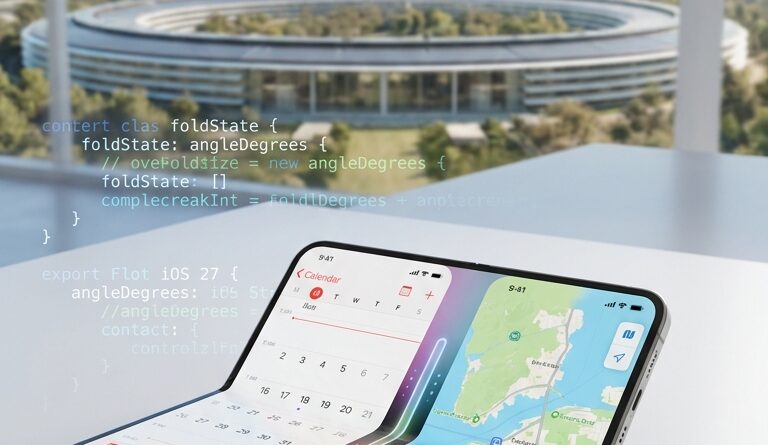
If you are exhausted by the endless “Apple foldable is coming… someday” cycle, you are not alone. Most foldable iPhone stories have been little more than recycled mockups and moving target launch dates. This time feels different. The newest iOS 27 beta appears to include framework references that point to a foldable iPhone being actively prepared in software, not just whispered about in supply-chain rumors. The big clues are names like foldState, angleDegrees, and checks for multiple displays, which sound exactly like the sort of plumbing Apple would need for a device that opens, closes, and changes behavior depending on how far it is folded. Add in fresh reports about panel suppliers and hinge testing, and the picture gets a lot clearer. If you have been wondering whether the foldable iPhone Ultra release date leak is finally worth taking seriously, the short answer is yes. Fall 2026 now looks plausible, and not just fan fiction.
⚡ In a Hurry? Key Takeaways
- Yes, the latest iOS 27 beta code makes Apple’s foldable iPhone look real, and Fall 2026 is now the most believable launch window.
- If you keep phones for three to four years, it may be smart to wait before upgrading to the iPhone 18 series, especially if multitasking and bigger-screen portability matter to you.
- Do not treat every leaked spec as final. The software signals are strong, but price, battery life, crease quality, and camera compromises are still open questions.
Why this leak matters more than the usual rumor mill
There is a big difference between “a supplier might be testing a panel” and “Apple’s operating system appears to be getting ready for a folding device.” The first can mean almost anything. The second usually means there is actual hardware on an internal roadmap.
That is why these iOS 27 references matter. Names like foldState suggest the system can detect whether the device is open, closed, or somewhere in between. angleDegrees hints at a hinge-aware interface, where apps can react based on how far the phone is bent. Multi-display checks suggest iOS is preparing for one device with an outer screen and an inner screen, each with different sizes, aspect ratios, and tasks.
That does not guarantee a shipping product. Apple kills projects all the time. But it is much stronger evidence than artist renders and vague analyst notes.
What the code hints at for day-one use
It likely will not act like a stretched iPhone
The most interesting part of the leak is not simply that Apple may be building a foldable. It is that the software seems prepared to treat the folded and unfolded states differently.
That matters because bad foldables often feel like two half-finished devices glued together. The closed screen can be too narrow. The open screen can feel like a blown-up phone app. Apple tends to avoid shipping hardware until the software behavior feels polished, so these framework clues suggest it is working on how apps transition between states in a cleaner way.
Angle-aware modes could be a major feature
AngleDegrees is the sort of term that gets hardware nerds excited for a reason. It implies the hinge may support partially folded positions, not just fully open or fully shut.
In plain English, think of a mini laptop stance for FaceTime, hands-free video watching on a tray table, or camera controls on one half of the screen with the live preview on the other. Samsung and others already do versions of this. The difference will be whether Apple makes it feel natural instead of gimmicky.
Dual displays are probably part of the plan
The multi-display checks strongly suggest Apple is building for two active display contexts. That fits the most common book-style foldable design. You get a regular outer screen for quick tasks, then open it into a tablet-like inner screen for reading, multitasking, and media.
If that reading is correct, the iPhone Ultra would not be a flip phone in the old Motorola sense. It would be closer to a pocketable iPad mini that can also behave like a normal iPhone when closed.
So, what is the likely foldable iPhone Ultra release date leak really saying?
Right now, Fall 2026 looks like the best bet.
Not because one random leaker said so. Because several pieces are starting to line up at the same time. Software support appears to be in motion. Display supply talk has become more specific. Hinge durability chatter has shifted from “Apple is exploring” to “Apple is pushing reliability hard before launch.” That is how late-stage Apple rumors usually begin to tighten up.
Apple also likes to enter categories late, but with a clear reason. Foldables are no longer weird prototypes. They are established enough that Apple can step in and claim it solved the pain points people still complain about, mainly crease visibility, hinge feel, app scaling, thickness, and battery tradeoffs.
Could it slip into 2027? Of course. Apple delays products if they are not ready. But compared with the vague guesses from a year ago, Fall 2026 now has a real technical backbone.
What Apple is probably trying to fix before launch
The hinge
The hinge is the whole game. If it feels soft, collects dust, develops play over time, or leaves a deep crease, the product gets mocked no matter how good the screen is.
Recent reports suggest Apple has been obsessing over hinge reliability and fold endurance. That tracks with its usual style. It would rather launch later than release something that feels delicate in daily use.
The crease
This is where many foldables still remind you that you are using a compromise. Some people stop noticing the crease. Others see it every single day and hate it. Apple will know this. If it launches, expect the company to make a huge deal out of whatever it has done to reduce visible creasing.
Battery and thickness
Foldables ask a lot from battery design. You have more screen area, more moving parts, and tighter internal packaging. That usually means one of three things. More thickness, less battery life, or higher cost. Sometimes all three.
So if you are imagining an ultra-thin foldable with no crease, top-tier cameras, and all-day battery life, pump the brakes a little. Physics still gets a vote.
Should you skip the iPhone 18 and wait?
This is the part most people actually care about.
Wait if you want a very different kind of iPhone
If you are bored with the standard slab design and you genuinely want a phone that can become a small tablet, waiting makes sense. Especially if you upgrade every three years or more. The foldable iPhone Ultra looks aimed at people who want fewer devices in their bag and more screen when they need it.
Do not wait if you want the safest buy
First-generation Apple products are often exciting, but they are also expensive and sometimes full of tradeoffs. If you want the best camera consistency, the fewest durability questions, and the most predictable resale value, a regular Pro model may still be the smarter buy.
A practical middle-ground
If your current phone is holding up fine, waiting another cycle is reasonable. If your battery is cooked or your phone is failing now, do not put your life on hold for a leaked device. Buy what solves your problem today.
What sounds plausible, and what sounds like hype
Plausible
A book-style foldable design. A premium “Ultra” positioning. An outer phone screen plus inner larger display. Hinge-based app modes. A high starting price. A launch window around Fall 2026.
Possible but not proven
Completely crease-free display tech. iPad-level multitasking on day one. Cameras with zero compromise versus a Pro Max. A dramatically thinner body than rival foldables.
Probably hype for now
Talk of a budget foldable iPhone. Claims that Apple has solved every foldable weakness at once. Leaks promising a magical battery breakthrough without any size or weight penalty.
What this means for real-world use
If these software hooks are what they look like, Apple is not just testing a folding screen. It is preparing iOS to react intelligently to shape, angle, and display changes. That is the difference between a novelty and a device you might actually use every day.
The real win could be continuity. Start a message on the outer screen. Open the device and continue on the larger display instantly. Put it in a half-fold on a table for video calls. Use two-pane layouts in Mail, Notes, Calendar, or Safari without the usual awkward resizing. That is the version of a foldable that makes sense for normal people, not just gadget collectors.
At a Glance: Comparison
| Feature/Aspect | Details | Verdict |
|---|---|---|
| Launch timing | iOS 27 beta references plus stronger supply-chain and hinge reports point to Fall 2026. | Most credible window yet, though not guaranteed. |
| How it may work | Framework keys like foldState, angleDegrees, and multi-display checks suggest a book-style foldable with hinge-aware software behavior. | Technically plausible and more convincing than standard rumors. |
| Should you wait? | Worth waiting for if you want a fresh form factor and can keep your current phone another year. Less smart if you need a reliable upgrade now. | Depends on your budget, patience, and tolerance for first-gen compromises. |
Conclusion
This is why today’s leak matters. In the last 24 hours, iOS 27 developer code appears to have moved Apple’s foldable iPhone from hazy rumor territory to something you can almost sketch out in real use. Those new framework keys, foldState, angleDegrees, and multi-display checks, line up neatly with the latest reporting on panel supply and hinge durability. Put together, they give us the clearest picture yet of how an iPhone Ultra could fold, how the two displays may behave, and why a Fall 2026 launch no longer sounds like wishful thinking. For anyone trying to decide whether to skip the 18 series and wait, this gives you a much cleaner read of the tradeoffs. The foldable looks real enough to watch seriously now. Just keep your expectations grounded. The most believable leaks are the ones that explain how the thing will actually work in your hand, not the ones promising magic.