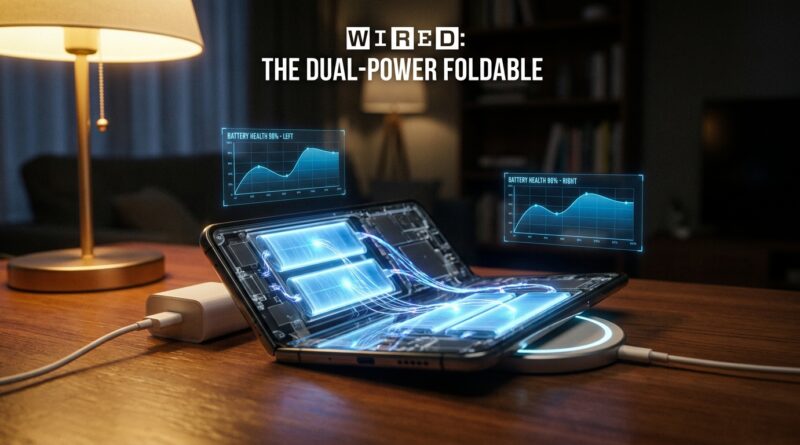
iPhone Duo ‘Dual‑Battery Lifespan Hack’: The Quiet Foldable Power Leak That Changes How You Actually Charge Apple’s First Book‑Style iPhone
The folding screen is getting all the attention, and I get why. It is new, flashy, and easy to show off in a demo. But if the iPhone Duo really arrives with a split, dual-cell battery inside, the bigger day-to-day story is much less exciting and a lot more expensive if you get it wrong. Most people will plug it in the same way they charge a normal iPhone, top it up whenever, leave it on MagSafe overnight, run it hot during gaming or video calls, and assume Apple handled the rest. That works fine on a regular slab phone. A foldable is different. Two battery cells, tighter thermal limits, and uneven wear can quietly age one side faster than the other. That matters because once one cell starts fading sooner, battery life gets less predictable, charging can slow down, and resale value takes a hit on a device likely to cost laptop money.
⚡ In a Hurry? Key Takeaways
- The likely dual-cell design means the iPhone Duo should not be treated exactly like a regular iPhone if you want the best long-term battery health.
- Your safest habit is a three-step plan: avoid repeated 0 to 100 charging, reduce heat, and use optimized charging windows instead of constant top-ups.
- On a foldable this expensive, better charging habits can help protect resale value and lower the odds of an early battery service bill.
Why this “battery leak” matters more than the folding screen
Here is the quiet part people skip. A book-style foldable usually has battery components spread across both halves of the device. That is often the only practical way to fit enough power around the hinge, screens, and internal frame.
If Apple follows the same basic engineering path, the iPhone Duo may use two battery cells managed as one system. That does not mean the phone becomes fragile overnight. It does mean charging behavior matters more.
Think of it like a two-tank setup feeding one machine. If one side runs hotter more often, or gets pushed harder during charging and discharging, wear may stop being perfectly balanced. You will still see one battery percentage on screen. Under the hood, the stress may not be perfectly even.
What dual-cell really means in plain English
On a normal iPhone, battery health is already affected by three familiar enemies. Heat. Time spent at 100 percent. Deep discharges to very low levels.
On a foldable, those same enemies are still there, but packaging gets tighter. The hinge takes space. The larger inner display uses more power. The charging system has to manage energy across more physical parts. That can make heat and charging balance more important than people expect.
It is not two separate iPhones in one
You are not going to charge the left side and right side separately. Apple would almost certainly hide all of this behind one clean battery indicator. But hidden complexity is still complexity. The software may be smart, yet battery chemistry still follows the same rules.
The real risk is uneven aging
The nightmare scenario is not that the phone suddenly breaks. It is slower, quieter wear. One cell ages a bit faster. Total runtime becomes less consistent. Fast charging behavior changes. The phone may warm up more often as the system works harder to manage two cells that no longer behave exactly the same.
The iPhone Duo battery life leak dual cell charging tips that actually matter
If you only remember one part of this piece, make it this. You do not need a lab coat. You need a routine.
Step 1. Stop charging it like a nightstand brick
If you usually leave your phone on a charger from 11 p.m. to 7 a.m. every night, that may be the first habit to rethink. Apple’s optimized battery charging helps, and it is worth using. But on a dual-cell foldable, spending long stretches pinned near 100 percent, especially in a warm room or under a pillow, is not ideal.
A better target for everyday use is roughly 20 to 80 percent when practical. Not obsessively. Just as a general pattern. If you need a full charge for travel, go for it. The problem is making 100 percent your default every single day.
Step 2. Heat is the real battery killer
This is the big one. Wireless charging creates extra heat. Fast charging creates extra heat. Gaming while charging creates extra heat. Folding phones also have less room to spread heat than chunky laptops or tablets.
If the iPhone Duo supports fast wired charging and MagSafe, use them with a little common sense. Wired charging is usually better when you want speed with less wasted heat. Wireless charging is handy, but I would save it for convenience, not for every overnight session.
And if the phone feels warm during charging, take the hint. Remove the case if it is thick. Stop running heavy apps. Set it somewhere cooler. Small moves matter here.
Step 3. Use small top-ups, not panic charges
The healthiest pattern for lithium batteries is usually gentle, moderate charging. That means short top-ups before you drop into the danger zone, not repeated runs down to 2 percent followed by a race back to 100.
For a device like the Duo, the sweet spot may be this: charge in the morning while getting ready, or add a quick afternoon top-up if you are a heavy user. Try not to make deep discharge your normal routine.
What charging setup makes the most sense?
If I were advising a friend spending this kind of money, I would suggest three simple defaults.
Best daily setup
Use a good wired charger for most charging. Keep Optimized Battery Charging on. Aim for partial charges during the day when possible.
Best travel setup
Charge to 100 percent when you actually need the range. Travel days are exactly when full charges make sense. Battery care is about patterns, not perfection.
Best desk setup
If you like parking your phone on a charger at work, wired is safer for long sessions than leaving it warm on a wireless puck all afternoon. If you do use wireless, avoid trapping heat with a thick case.
Should preorder buyers be worried?
Not panicked. Just realistic.
First-generation products are always a little more of a lifestyle decision than the launch event makes them look. A foldable asks more from the owner. More care. More tolerance for trade-offs. More thought about long-term repair costs.
That does not make the iPhone Duo a bad idea. It just means buyers should think beyond the wow factor. If your current habit is to abuse your phone battery, run it hot, and replace devices every two years anyway, you may not care. If you keep phones longer or count on strong trade-in value, this stuff matters a lot.
What to watch for in reviews and teardowns
When the first hands-on reviews and teardowns arrive, skip past the hinge beauty shots for a minute and look for these details.
Battery split and capacity balance
Are the two cells close in size, or is one clearly doing more of the work? A more uneven split can sometimes raise more questions about balancing and wear.
Thermal design
Is there strong cooling material around the charging components and main board? More heat control usually means better battery comfort over time.
Repair difficulty
Can both battery sections be serviced without turning the whole repair into a nightmare? On a pricey foldable, battery replacement cost is part of ownership, not just a future problem.
Who should skip the iPhone Duo entirely?
If you want a phone you never have to think about, a foldable may not be your best match. Same if you rely heavily on wireless charging pads in the car, at your desk, and by your bed. That convenience-first setup can be rough on a heat-sensitive design.
Also, if you are already stretching your budget to get one, remember that battery longevity is part of the total cost. A foldable that loses stamina early is not just annoying. It is expensive.
The practical three-step plan I would give any buyer
Here is the no-nonsense version.
- Keep everyday charging in the middle range when you can. Roughly 20 to 80 percent is a good habit.
- Use wired charging more often than wireless, especially for regular daily charging.
- Avoid heat stacking. Do not fast charge, game, stream, and leave the phone in a thick case all at once.
That is it. No battery superstition. No weird rituals. Just a sane routine built for a more complicated phone.
At a Glance: Comparison
| Feature/Aspect | Details | Verdict |
|---|---|---|
| Dual-cell battery design | Likely spreads battery components across both halves for space and balance, but adds charging and thermal complexity. | Good for fitting a foldable, but worth treating with more care than a normal iPhone. |
| Wireless vs wired charging | Wireless is convenient, but often creates more heat. Wired charging is usually more efficient for routine use. | Use wired most days. Save wireless for convenience, not constant all-night charging. |
| Best battery-care habit | Moderate charging, less heat, and fewer long sessions parked at 100 percent. | The easiest way to protect battery health and resale value over time. |
Conclusion
The smart way to think about the iPhone Duo is not just as a cool folding screen. It is as a very expensive first-generation device with a more complicated power system than most iPhone buyers are used to. That is why this matters right now. Preorder decisions are being made on hype, not on the everyday reality of living with a two-battery foldable that costs laptop money. If you use a simple three-step charging plan, keep heat down, avoid living at 100 percent, and lean on wired charging more often, you give yourself a much better shot at protecting resale value and avoiding an early battery replacement. More importantly, you can decide before trade-in day whether Apple’s first book-style foldable really fits your habits, instead of learning that the hard and expensive way.