iPhone Duo ‘Crease‑Proof Screen Hack’: The Quiet Nano‑Texture Leak That Changes How You Actually Live With Apple’s First Foldable
You are not crazy to worry about the iPhone Duo’s inner screen. A lot of people still remember the first wave of foldables, where the crease got deeper, the top layer started looking tired, and one bit of pocket grit could turn a very expensive phone into a very stressful week. That is the part of the iPhone Duo story getting drowned out by preorder chatter. Price is flashy. Ship dates are easy to tweet. But screen life is what decides whether you still love this thing six months later.
The quiet leak making the rounds is not really about one dramatic flaw. It is about the little details. Supplier talk and early impressions point to a nano-texture style finish, layered ultra-thin glass, and a hinge design that may handle normal use well, but could react badly to dust, off-center closing, and repeated one-handed snaps shut. In plain English, the Duo may be less about babying a fragile toy and more about learning a few habits that keep the crease from becoming the star of the show.
⚡ In a Hurry? Key Takeaways
- The iPhone Duo’s real risk is not just the visible crease. It is long-term stress on the inner display from dust, pressure, and bad closing habits.
- Use two hands to close it, keep pockets grit-free, and never press hard on the center fold line.
- If you are spending around two grand, durability and care habits matter more than launch-day hype.
Why this leak matters more than the usual rumor mill
Most leaks are fun but shallow. New colors. New camera bump. Tiny battery changes. This one matters because it gets into how the iPhone Duo might age.
That is the whole game with a foldable. A slab phone can get scratched and still work fine for years. A foldable has more moving parts, more layers, and more chances for tiny mistakes to snowball. If the hinge gets even slightly uneven, or if the inner layer takes repeated pressure in the same wrong spot, the crease can become more visible and the screen can feel older, faster.
The phrase to pay attention to here is “nano-texture.” If the leak is accurate, Apple may be using a surface treatment that improves glare handling and finger feel on the inner display. Sounds great. But textured or specially coated surfaces can also change how smudges show up, how cleaning should be done, and how micro-abrasions look over time.
What “crease-proof” probably really means
Let’s be realistic. “Crease-proof” is marketing language, not magic.
No foldable screen is truly crease-free after real-world use. The better question is this. How visible is the crease on day one, and how much worse does it get after months of opening and closing? A good hinge and well-managed display layers can keep the crease shallow and less noticeable. A bad setup, or rough handling, can make that center line stand out sooner than you would like.
So when people talk about a “crease-proof screen hack,” the hack is not some hidden setting. It is the combination of smarter materials and smarter use. Apple can only control the first part. You control the second.
The three weak points hiding in the engineering
1. Dust and pocket grit
This is the boring danger, which usually means it is the real danger. Foldables hate debris. Tiny grains of dirt can work their way into hinge edges or get trapped when the phone closes. Even if the Duo has better sealing than early rivals, no mechanical foldable is thrilled about living in the same pocket as lint, sand, or crumbs.
If you spend time at the beach, in dusty job sites, or with loose stuff in your pockets, you should care more than the average buyer.
2. Lazy one-handed closing
This is where a lot of normal people accidentally stress a foldable. You grab the top half and snap it shut from one side. It feels natural. It also creates uneven force. Over time, that can put extra strain on the hinge alignment and the display layers near the fold.
Think of it like shutting a hardcover book by pressing one corner over and over. The book still closes, but the wear is not balanced.
3. Pressure on the inner screen
Ultra-thin glass sounds tough, and compared with older plastic-heavy designs it is better. But it is still part of a layered structure that bends. That means fingernail pressure, poking the crease, shoving the closed phone into a packed bag, or sitting down with it in a back pocket can all add stress in ways a regular iPhone owner never has to think about.
The care blueprint I’d give a friend before they preorder
If you want the short version, treat the Duo like a premium notebook with a flexible spine, not a brick.
Close it with two hands
Use both sides. Apply even pressure. It sounds fussy, but it quickly becomes habit, and it is one of the easiest ways to reduce uneven hinge wear.
Keep the pocket clean
Not “pretty clean.” Actually clean. Don’t share a pocket with coins, keys, receipts, sand, or gym grit. A dedicated pocket is the smart move.
Do not press on the crease
People do this constantly on demo units. They run a thumb right down the center to “test” it. Don’t. If the Duo has a visible fold line, let it be visible. Prodding it does not fix anything.
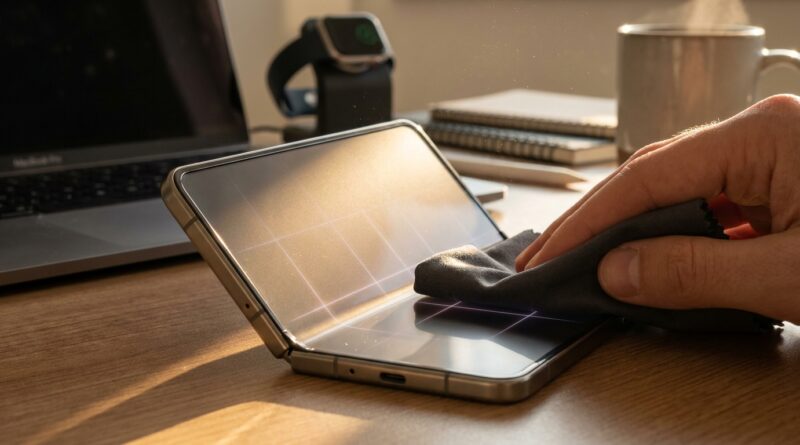
Use a soft microfiber cloth only
If a nano-texture finish is really part of the design, cleaning habits matter. Skip paper towels, shirt hems, and harsh cleaners. A clean microfiber cloth is boring, but safe.
Be careful with stuffed bags
A foldable hates concentrated pressure. If you toss it into a backpack full of chargers, metal water bottles, and random junk, you are asking for trouble.
Open it all the way, gently
Half-open fiddling is fine if the phone is designed for it, but twisting the two halves against each other is not. Open and close in a straight, calm motion.
Should this stop you from buying the iPhone Duo?
Not necessarily. It should stop you from buying it blindly.
If you are the kind of person who upgrades every year, keeps AppleCare+, uses a case, and does not mind changing a few habits, the Duo could be a fun first-gen jump. If you keep phones for four or five years, work in dirty environments, or hate the idea of thinking about how you close your phone, then waiting for version two might be the wiser play.
That is not fearmongering. It is just how first-generation hardware works, especially when moving parts are involved.
What Apple will probably not say out loud at launch
Apple will talk about precision engineering, durability testing, and thousands upon thousands of folds. And to be fair, those tests matter. But lab folding is not real life.
Real life includes lint, rushing out the door, using the phone one-handed in a parking lot, dropping it on a couch where it lands half-open, and stuffing it into jeans that are already too tight. That is why leaks like this are useful. They fill in the gap between keynote confidence and support-page reality.
Apple may very well have the best hinge in the foldable business on day one. That still does not mean the Duo will forgive careless use.
My read on the leak
The leak does not scream “disaster.” It screams “fine margins.” That is a big difference.
If the hinge is solid and the nano-texture layer holds up to normal cleaning, the Duo could avoid the ugly early-foldable reputation that still scares buyers. But if you add dust, repeated off-axis closing, and constant pressure on the fold area, the same design could age fast enough to annoy owners long before the battery gives out.
So yes, this changes how you live with the device. Not because it is fragile in a cartoonish way, but because foldables reward good habits and punish lazy ones.
At a Glance: Comparison
| Feature/Aspect | Details | Verdict |
|---|---|---|
| Crease visibility over time | Likely better managed than early foldables, but still affected by closing habits and pressure on the fold line. | Promising, not magic. |
| Nano-texture inner screen finish | Could improve glare and feel, but may require gentler cleaning and show wear differently over time. | Useful, but needs care. |
| Hinge durability | Expected to be strong in normal use, but dust, grit, and one-sided closing could add stress over months. | Good if you build better habits. |
Conclusion
The iPhone Duo story is not really about whether people can afford it. It is about whether they can live with it. Right now, the loudest conversation is stuck on price tags and release windows, while the real make-or-break issue is buried in the fine print of hinge design, ultra-thin glass layering, and that leaked nano-texture approach. The fresh chatter and early hands-on clues suggest the weak points are familiar. Dust, pocket grit, and careless one-handed closes can all make a small crease look bigger and a strong hinge feel older sooner. The good news is that this does not sound like an automatic dealbreaker. It sounds like a phone that will reward careful owners and expose sloppy habits fast. If you are thinking about a preorder, this is the checklist that matters. It helps you decide if the Duo fits your life, protects a very expensive purchase, and lowers the odds that your shiny new foldable becomes tomorrow’s regret post.