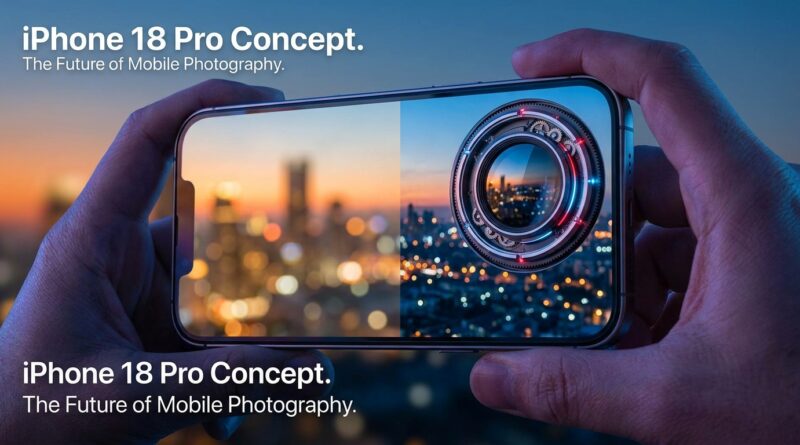
iPhone 18 Pro Variable Aperture Leak: The ‘DSLR in Your Pocket’ Camera Hack Apple Hasn’t Announced Yet
If you are stuck between buying an iPhone 17 Pro now or waiting for the iPhone 18 Pro, I get the frustration. Camera rumors always sound huge until you try to pin down what they mean for your actual photos. “Better camera” could mean anything. The reason this iPhone 18 Pro variable aperture camera leak matters is simple. It points to a real hardware change that could help with two problems people notice right away: grainy low-light shots and portrait blur that looks a little too fake. That does not mean your iPhone will suddenly turn into a full DSLR. But it could mean more natural background blur, better highlight control in bright scenes, and a smarter balance between sharpness and light gathering. The big question is whether that improvement will be obvious enough to justify waiting. Let’s sort the useful part from the rumor fog.
⚡ In a Hurry? Key Takeaways
- The iPhone 18 Pro variable aperture camera leak could bring more natural blur and better control in tricky lighting, but it will not magically replace a dedicated camera.
- If you mainly care about night shots and portraits, waiting may make sense. If your current phone is struggling now, the 17 Pro will still be a strong buy.
- This is still a leak, not a confirmed feature, so do not delay a needed upgrade based only on rumor-season excitement.
What the leak is actually saying
The core claim is that Apple may add a mechanical variable aperture to at least one rear camera on the iPhone 18 Pro. That sounds technical, but the idea is pretty easy to picture.
Your phone camera lens has an opening that lets light in. On most phones, that opening is fixed. Apple can do a lot with software, but the lens itself does not physically open and close in a meaningful way during shooting. A variable aperture changes that. It can widen to let in more light or narrow to control brightness and depth.
That is why people keep calling it a “DSLR in your pocket” trick. Real cameras have used this for years. Phones mostly fake the effect with processing.
If you have been following the wider rumor trail, this lines up with a broader hardware push described in iPhone 18 Pro ‘Stealth AI’ Leak: A20 Chip, Mechanical Aperture And The Hidden Thermal Hack Behind Both. The short version is that Apple may be trying to improve image quality with both optics and smarter processing at the same time.
Why variable aperture matters to normal people
1. It could make portrait shots look less fake
Right now, iPhone portrait mode often looks impressive at first glance. Then you zoom in and see the usual problems. Hair gets cut out badly. Glasses edges look weird. Background blur can look too smooth and too uniform.
A real aperture helps because it creates some natural optical blur before software steps in. That means Apple may not need to fake the whole look from scratch. The result could be portraits that feel more like a camera photo and less like a filter.
2. It could help in bright daylight too
Most people hear “more light” and think night photos. Fair enough. But a narrower aperture can be useful in bright outdoor scenes where highlights blow out fast. It can help the camera keep more detail in clouds, windows, and shiny surfaces.
This is especially helpful if Apple gives the system freedom to choose the best setting automatically, instead of forcing one fixed look every time.
3. It might improve low-light realism, but with limits
This is the part people care about most. Will it fix grainy night shots? Maybe a little. Not completely.
A wider aperture lets more light hit the sensor. That can reduce the need for aggressive brightening, which often causes noise and that smeared “watercolor” look in dark scenes. But phone sensors are still small compared with dedicated cameras. Physics still wins.
So yes, the iPhone 18 Pro variable aperture camera leak points to a possible low-light gain. Just do not expect miracles. Street signs at midnight may still look rough if you crop in hard.
What it probably will not fix
Rumors tend to turn every camera upgrade into a life event. A variable aperture is useful, but it has limits.
It will not make every night photo clean
If the scene is very dark, the phone will still rely on software processing, longer exposures, and sensor tricks. That means moving subjects like kids, pets, or cars can still blur.
It will not turn the iPhone into a full camera system
You are still dealing with a tiny lens and a tiny sensor compared with a mirrorless camera or DSLR. The gap may shrink in some situations, but it does not disappear.
It may only affect one camera lens
This is a big one. Apple could apply the variable aperture feature only to the main wide camera. If that happens, ultrawide and telephoto shots might not benefit much at all.
Should you wait for the iPhone 18 Pro?
This is where the rumor gets practical.
Wait if your top priority is photography
If you regularly take portraits, food photos, travel shots at night, or indoor family pictures, this leak is worth paying attention to. Variable aperture is the kind of change that can affect the “feel” of a photo, not just benchmark charts.
Buy the 17 Pro if you need a phone now
If your battery is fading, your current camera is unreliable, or your phone is just becoming annoying to live with, waiting another cycle may not be worth it. The 17 Pro will almost certainly still deliver excellent photos, especially for everyday use, social media, and casual video.
Wait for confirmation if you are only upgrade-curious
If your current iPhone still works fine and you are mostly wondering whether the 18 Pro will be a meaningful leap, the best move is patience. Camera leaks can be directionally right but wrong on details.
Why Apple would want this feature now
Apple has squeezed a lot out of computational photography. That approach works, but people are starting to notice its limits. Photos can look overprocessed. Skin can look too smooth. Background blur can look pasted on.
A mechanical aperture would give Apple something it badly needs in the camera conversation. Not just “more AI.” Not just “better image pipeline.” A real optical upgrade people can understand.
And from a keynote point of view, it is perfect. Apple gets a simple line. More control over light. More natural portraits. Better low-light balance. Easy to demo. Easy to market.
How this compares with what Samsung and others have tried
Apple would not be first here. Samsung has experimented with variable aperture before. Some Android brands have also played with more camera-like hardware ideas.
The catch is that these features only matter if the software knows when to use them well. A camera can have clever hardware and still produce photos that look inconsistent. Apple’s advantage, if this leak is real, would be its tight hardware and software tuning.
That means the success of the iPhone 18 Pro variable aperture camera leak will not come down to the aperture alone. It will come down to whether Apple uses it in a way that makes photos look better without forcing users to think about settings.
What to listen for at the keynote
If Apple announces this in September, ignore the flashy sample shots for a minute and listen for specifics.
Watch for these clues:
Does Apple say the aperture is mechanical and adjustable, or just “improved”?
Is it on the main camera only, or more than one lens?
Do they mention better natural bokeh, low-light detail, or highlight control?
Do they show before-and-after examples with hair, glasses, pets, or objects in the foreground? Those are the hard cases.
If Apple stays vague, that usually means the real-world effect may be smaller than the headline feature suggests.
My practical take
This is one of the more interesting iPhone camera leaks in a while because it points to hardware, not just processing jargon. That makes it easier to believe it could have visible benefits.
Still, the safe expectation is not “DSLR in your pocket.” It is “slightly more camera-like results in common situations.” That may not sound dramatic, but for a lot of people, that is exactly the upgrade they want.
If your biggest complaint is that night shots look noisy and portraits look synthetic, this rumor targets the right problems. If your biggest complaint is zoom reach, battery life, or charging speed, this is probably not the feature that should decide your next purchase.
At a Glance: Comparison
| Feature/Aspect | Details | Verdict |
|---|---|---|
| Portrait quality | A variable aperture could add more natural background blur before software processing kicks in. | Promising, especially for people who dislike fake-looking portrait mode. |
| Night photography | A wider opening may let in more light, which can reduce noise and heavy processing in some scenes. | Helpful, but not a miracle fix for very dark shots. |
| Upgrade decision | Best for buyers who care most about camera realism and can afford to wait for confirmation. | Worth watching, but not enough on its own if you need a new phone today. |
Conclusion
The iPhone 18 Pro variable aperture camera leak is not just another “camera got better” rumor. It points to a specific change that could make photos look more natural in ways people actually notice, especially in portraits and tricky lighting. But it is still a leak, and that means the smart move is to keep your expectations grounded. Right now the iPhone community is frozen between buying the 17 Pro and waiting out the 18 Pro rumors, with Reddit threads and Weibo leaks all circling the same question: will a mechanical variable aperture actually change your photos or is it just Apple’s next marketing bullet point. The good news is that now you have a simple upgrade map. If camera quality is your top reason to upgrade, this is one to watch closely. If not, you can ignore the hype, buy with confidence, and wait for Apple to prove the details when the keynote arrives.