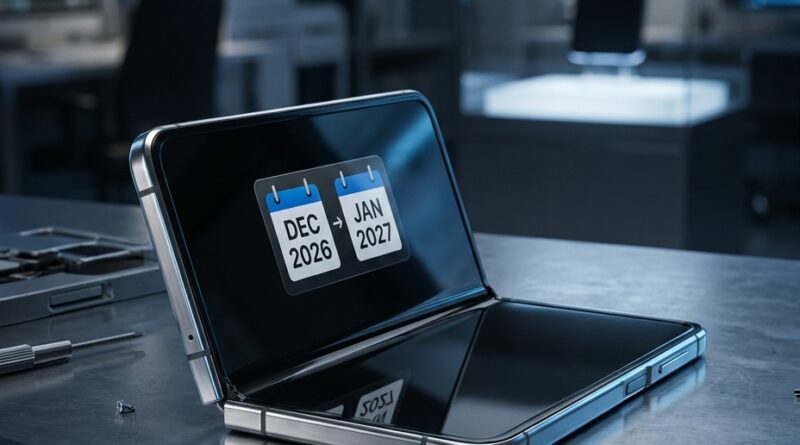
iPhone Ultra Delay Leak: Why Apple Just Pushed Its Foldable To 2027 And What That Secretly Means For iPhone 18
If you were timing your next upgrade around Apple’s foldable, this leak is a gut punch. A lot of people had mentally circled late 2026 for the first iPhone Ultra foldable, started planning trade-ins, and maybe even held onto an aging phone a little longer. Now the story has shifted. The latest report chain points to Apple pushing that device into early 2027, with pricing that could start near $2,000. That is not a small delay. It changes budgets, contracts, resale value, and whether waiting even makes sense anymore. The good news is this delay does tell us something useful. It suggests Apple still is not happy with durability, hinge design, display crease control, battery life, or all four at once. It also hints that the iPhone 18 line may become even more important this fall, because Apple now needs a strong traditional upgrade cycle to fill the gap.
⚡ In a Hurry? Key Takeaways
- The iPhone Ultra delayed to 2027 rumor now looks serious, and a late 2026 launch appears much less likely.
- If your current iPhone is already struggling, buying an iPhone 18 this fall will probably be the smarter move than waiting 12 to 18 more months.
- A first-gen Apple foldable could cost around $2,000, so waiting may mean paying more and taking on more early-adopter risk.
What actually happened
The big change is not just one random leak. It is that several rumor paths are now landing in roughly the same place. Apple’s first foldable iPhone Ultra is said to be slipping from late 2026 into the first quarter of 2027.
That matters because timing is everything with phones. People plan around upgrade cycles. Carriers push 24- and 36-month deals. Trade-in values drop fast. A delay of a few months can cost real money if you were hanging on for one specific device.
The other part that stings is the price. Reports are pointing to an ultra-premium tier that could start around $2,000. So even if you do wait, the reward may not be a practical everyday iPhone. It may be a very expensive first-generation experiment.
Why Apple would delay it
Apple usually does not like being first if being first means being messy. It would rather be late and claim it “got it right.” That pattern fits this situation almost perfectly.
Hinge durability is probably still the biggest headache
Foldables live and die by the hinge. If it feels loose, gets dust inside, or starts wearing out too early, the whole product feels risky. Apple knows people expect an iPhone to last years, not just survive a careful six months.
The display crease still matters more than tech fans admit
Some foldable users stop noticing the crease. Some never stop noticing it. Apple is likely trying to make that compromise less obvious before it ships anything with the iPhone name on it.
Battery life gets harder in a thin foldable
People want a big screen and all-day battery. Physics is not always cooperative. A foldable has to split parts across two sides, stay thin, manage heat, and still feel premium. That is a lot to solve at once.
Apple may be protecting its brand
If Apple launches a foldable and reviews say it is fragile, creased, too thick, and overpriced, that bad first impression sticks. Waiting until 2027 may simply mean Apple decided the product is still not “Apple ready.”
What this secretly means for iPhone 18
This is the part regular buyers should care about most. If the foldable is delayed, Apple needs the standard iPhone line to carry more of the excitement and more of the sales load in 2026.
That could affect the iPhone 18 in a few important ways.
1. Apple may load more premium features into iPhone 18 Pro models
If the foldable is no longer coming in late 2026, Apple has a gap to fill. One easy fix is to make iPhone 18 Pro and Pro Max more tempting. Think camera upgrades, display improvements, battery gains, and maybe more obvious AI or software features that feel easier to market.
2. Pricing pressure could increase
A delayed foldable does not automatically mean a cheaper regular iPhone. In fact, Apple may use a more expensive foldable to make Pro pricing feel “reasonable” by comparison. That is a classic premium-brand move.
So if the foldable lands at around $2,000, an iPhone 18 Pro at a high but lower price can suddenly look like the sensible luxury option.
3. Apple may keep the regular lineup safer and more polished
There is another angle here. If Apple is struggling with foldable hardware, it may avoid taking too many other risks at the same time. That could mean the iPhone 18 line ends up less flashy, but more refined. Better battery. Better thermals. Better cameras. Fewer weird experiments.
4. Trade-in strategy becomes more important
Apple and carriers know many buyers were waiting. To stop people from drifting off, they may push aggressive trade-in deals around the iPhone 18 launch. If that happens, the “buy now and revisit foldables later” path gets even more attractive.
Should you wait for the foldable or buy an iPhone 18?
This is where the rumor becomes real life. Here is the simple version.
Wait if you are in this group
You should consider waiting if your current phone still works well, you really want a foldable more than a normal slab phone, and you are comfortable paying first-gen prices. You also need patience, because “early 2027” can still move again.
If your current phone is an iPhone 16 or 17-class device and it is meeting your needs, waiting is at least possible.
Buy iPhone 18 if you are in this group
If your battery health is bad, your camera feels dated, your storage is always full, or your screen already has issues, do not build your life around a rumor. Buy the iPhone 18, enjoy the next few years, and let Apple prove the foldable is worth caring about.
This is the best choice for most people. Not the most exciting choice. The best one.
Skip Apple’s foldable entirely if you are in this group
If you hate paying top dollar, keep phones for four or five years, or do not want to baby your device, Apple’s first foldable may not be for you at all. Second-generation hardware is often where these products start making more sense.
What the delay says about Apple’s usual playbook
Apple often enters a category after everybody else, studies what annoyed early buyers, and then tries to remove just enough friction to make the late arrival look smart.
That does not mean Apple always wins. It does mean a delay usually has a reason. In this case, the reason is probably that Apple thinks a foldable iPhone has to feel boringly reliable before it can be sold as an iPhone. That is a high bar, and honestly, it should be.
How to make a smart upgrade decision right now
If you are feeling stuck, use this quick checklist.
Buy this fall if:
Your phone is older than two to three years, your battery is getting rough, your carrier has a good trade-in offer, or you simply need a dependable phone now.
Wait until 2027 if:
You are financially ready for a $2,000 device, you love foldables, and your current phone is still in good shape.
Do not wait based on hope alone if:
You are assuming the foldable will be cheap, durable on day one, and easy to get. None of that looks likely right now.
The part leaks are quietly telling us
Buried under the disappointment is one useful clue. If Apple really is still refining hinge, glass, and battery design, that suggests the company is taking durability seriously instead of racing to hit an old date.
That is frustrating today, but it may save buyers from a compromised first release. A foldable that arrives later with better crease control, stronger glass layers, and fewer battery tradeoffs is better than one that launches on schedule and ages badly.
At a Glance: Comparison
| Feature/Aspect | Details | Verdict |
|---|---|---|
| Foldable launch timing | Late 2026 now looks replaced by an early 2027 window across multiple leak chains. | Do not plan your 2026 upgrade around it. |
| Expected price | Rumors point to a starting price near $2,000, possibly more depending on storage. | This will be a niche, luxury device first. |
| Best choice for most buyers | The iPhone 18 should be easier to buy, easier to justify, and likely more polished for daily use. | Buy iPhone 18 unless you specifically want a foldable. |
Conclusion
The iPhone Ultra delayed to 2027 news is annoying because it is not just gossip. It changes real buying plans. Multiple report chains now agree Apple has likely pushed its first foldable from late 2026 into early 2027, while also testing a very high price that could start around $2,000. For anyone pacing their contract, trade-in timing, or savings around that earlier date, this is a genuine disruption. But it also gives you a clearer path. Apple appears to be using the extra time to improve hinge strength, glass durability, crease control, and battery life, which is exactly what you would want before a first-generation foldable shows up. In the meantime, this delay likely makes the iPhone 18 line more important, and possibly more appealing, than many expected. So if your current phone is aging badly, do not feel foolish for moving on this fall. Waiting can make sense, but only if you truly want a foldable and can live with the price, risk, and extra delay. For everyone else, the smarter play may be simple. Buy the solid iPhone 18, let Apple sort out foldables, and avoid getting burned by a shifting roadmap.