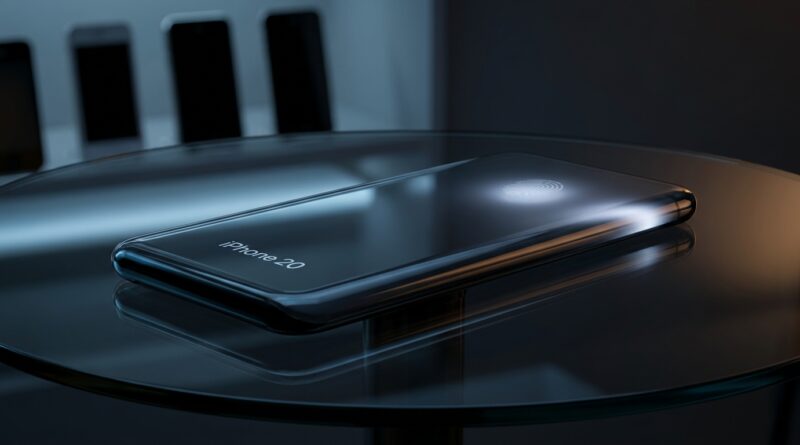
iPhone 20 Leak: Apple’s 2027 ‘Ghost Glass’ Design Could Quietly Kill Bezels For Good
If you are tired of the iPhone rumor cycle shouting about the next model while quietly missing the bigger story, you are not alone. Every year, leaks focus on camera bumps, colors, and one more button. Meanwhile, the design shift that could actually change how iPhones look for the next decade may be sitting further out. The latest iPhone 20 bezel free design leak points to Apple aiming for a 2027 phone that looks like one clean sheet of glass, with borders pushed so far down they nearly disappear. That is why this matters. The iPhone 20 is expected to mark 20 years of the iPhone, and Apple loves tying major redesigns to milestone devices. The smart way to read these leaks is not to ask, “Should I wait for this?” It is to ask, “What is Apple clearly trying to build toward?” Right now, the answer looks a lot like a ghost glass iPhone.
⚡ In a Hurry? Key Takeaways
- The iPhone 20 bezel free design leak suggests Apple is targeting a near all-screen “ghost glass” look for its 2027 anniversary iPhone, but the current evidence is still early.
- If you follow Apple rumors, pay less attention to flashy renders and more attention to display packaging, under-screen sensor progress, and 2026 supply chain reports.
- Do not make buying plans around this yet. Milestone iPhone designs often change late if yield, durability, or Face ID performance are not ready.
Why people are suddenly talking about iPhone 20
It sounds odd at first. We have not even gotten through the next few iPhone cycles, and already people are passing around renders of a phone due in 2027.
But this is how big Apple design stories usually start. First come broad supply chain hints. Then concept renders based on those hints. Then analysts and leakers start connecting the dots. By the time a major redesign is close, the basic direction has often been visible for a while.
That is what makes the current iPhone 20 bezel free design leak worth watching. Not because a render is proof, but because the end goal fits Apple’s long-running pattern. Apple has spent years trimming bezels, hiding sensors, flattening hardware lines, and making the screen feel more dominant. A truly border-light iPhone is the logical next step.
What “ghost glass” likely means in plain English
“Ghost glass” is the kind of name rumor culture loves, but the idea itself is simple. Imagine an iPhone where the frame visually steps back and the display seems to float almost edge to edge, with the black border around the screen reduced to the point that most people barely notice it.
That does not necessarily mean zero bezel in the literal sense. Phones still need structure. Screens need protection. Impacts need somewhere to go when you drop the thing in a parking lot.
What it probably means is this:
- Thinner visible black borders around the display
- Better glass-to-frame blending
- More hidden front-facing components
- A cleaner front look with less visual interruption
So when you hear “bezel-free,” read it as “close enough that normal people will call it bezel-free.” That is usually how this story goes.
What the leak gets right, and where the hype starts
What seems believable
The believable part is Apple’s direction. Apple has clear reasons to chase this design:
- It gives the 20th anniversary iPhone a dramatic visual identity
- It helps Apple keep the same phone size while making the screen feel bigger
- It creates a premium look that rivals can copy for years after
There is also a technical roadmap that makes this feel plausible. Display makers keep improving how panels are packaged at the edges. Under-display component tech keeps getting better, even if it is not perfect yet. Apple is patient. It would rather arrive late and polished than first and messy.
What is still speculative
The weak point is the confidence level around exact visuals. A leak saying Apple is working toward a borderless look is one thing. A polished render claiming to show the final front panel shape in 2025 or 2026 is another.
Renders are often best treated like movie posters for rumors. They can be useful. They can also oversell how finished an idea really is.
So yes, the big design goal makes sense. No, that does not mean every circulating image is accurate.
The three technical hurdles Apple still has to solve
1. Under-screen Face ID or camera compromises
Apple cannot just wish the front sensors away. Face ID needs a lot more than a simple selfie camera. If Apple wants a cleaner front, it has to hide more of that system under the display or shrink the visible cutout even further.
This is harder than it sounds. Sensors do not enjoy peeking through active display layers. Light transmission, image quality, and reliability all become problems.
2. Durability at the edges
The closer you push a screen to the edge, the less room you have for physical protection and structural forgiveness. That may look amazing on a launch slide. It matters less when the phone slips from your hand onto tile.
Apple knows this. A milestone iPhone cannot feel fragile, especially at premium prices.
3. Manufacturing yield
This is the boring issue that often decides everything. Apple can dream up a gorgeous display design, but if too many panels fail in production, the plan gets delayed, scaled back, or pushed into only the most expensive model.
That is why supply chain chatter matters more than fan art. Yields decide what ships.
Why the 2027 timing actually makes sense
Apple loves anniversaries. The iPhone X was the obvious example. It used a milestone moment to justify a bolder redesign and a new front-face identity.
The iPhone 20, if that naming holds, would give Apple another perfect excuse to do the same thing. A near bezel-free front, cleaner sensor integration, and a “just glass” feel would be exactly the kind of change Apple would save for a celebratory model.
This is also enough time for Apple’s suppliers to improve display packaging and hidden component performance. Two years in smartphone engineering is a long time. It is not magic, but it is enough for several stubborn problems to become manageable.
What readers should really watch in late 2026 and 2027
If you want to separate real progress from clickbait, ignore the loudest thumbnails and watch for these signs instead.
Display border reports from major suppliers
If trusted supply chain sources start talking about new panel packaging methods, narrower black matrix borders, or unusual screen lamination work for Apple, that is meaningful.
Face ID changes before the iPhone 20
If Apple reduces the Dynamic Island further or shifts more sensors under the display in earlier models, that is your breadcrumb trail. Apple rarely jumps from today’s design straight into a fully cleaned-up front in one leap.
Pre-production shell leaks
By 2027, physical parts and chassis leaks will matter a lot more than polished renders. Dummy units, screen assemblies, and front glass parts usually tell the truth faster than concept art does.
What this means for normal buyers, not just rumor addicts
Most people should not plan purchases around the iPhone 20 yet. That part is simple. If you need a phone in the next year or two, buy based on the phone you can actually hold, not a fantasy phone from 2027.
But there is still value in following this story. It helps you see the bigger arc of iPhone design. Apple may be nearing the end of the “cutout era” and moving toward a front face that is almost entirely display. If that happens in 2027, it will not stay a one-off trick. It will likely shape the look of iPhones for years after.
That is the real point of this leak. It is less about one phone, more about where the whole line is headed.
Reality check: how likely is this, really?
Here is the grounded version.
- A more seamless, lower-bezel 2027 iPhone is plausible.
- A dramatic anniversary redesign is very Apple-like.
- A perfectly bezel-less phone with no visual trade-offs is much less certain.
If I had to call it today, I would say the iPhone 20 bezel free design leak is probably directionally right and visually exaggerated. Apple likely wants the ghost glass effect. Whether it can deliver the full wow version by 2027 depends on sensors, durability, and manufacturing.
At a Glance: Comparison
| Feature/Aspect | Details | Verdict |
|---|---|---|
| Bezel-free front design | Leaks point to much thinner visible borders and a more seamless glass-first look for the 2027 anniversary iPhone. | Plausible goal, but “completely bezel-free” is likely marketing shorthand. |
| Hidden front sensors | Apple would need better under-screen solutions for Face ID components and possibly the selfie camera. | Biggest technical challenge. Watch this closely. |
| 2027 launch confidence | The anniversary timing fits Apple’s habits, but production yield and durability could still delay or soften the redesign. | Reasonable to watch, not reasonable to count on yet. |
Conclusion
The smart read on the iPhone 20 bezel free design leak is not blind hype and not eye-rolling dismissal. It is a roadmap. Apple appears to be aiming at a 2027 iPhone that pushes the screen closer than ever to that clean slab-of-glass ideal. Whether the final result is truly “ghost glass” or just the closest version yet, this is the kind of long-game design shift that can shape every iPhone that follows. That is why it helps to zoom out from the noisy rumor cycle. Watch October 2026 leaks for signs of display and sensor progress, then pay close attention to 2027 pre-production shells and panel parts. That is where hype starts turning into reality.