iPhone Fold Outer Screen Leak: Why Apple’s Tiny 5.5‑Inch Display Might Be Its Smartest Move Yet
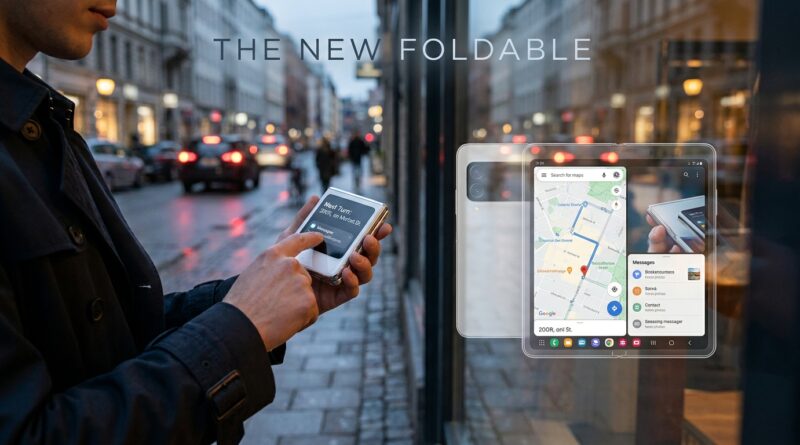
If you keep seeing iPhone Fold leaks and thinking, “That outer screen looks tiny,” you are asking the right question. Most people do not care about a fancy folding panel spec sheet nearly as much as they care about one simple thing. Can you use the phone closed without getting annoyed? The latest iPhone Fold 5.5 inch outer screen leak suggests Apple may be doing something that sounds odd at first, but could make a lot of sense in daily life. A smaller outer display might actually be easier to reach, easier to use one handed, and better for quick tasks like checking messages, maps, music, or two-factor codes. The catch is that 5.5 inches can feel very different depending on the phone’s shape. So the real story is not the number itself. It is how that number affects typing, app layout, and whether you will feel forced to unfold the phone all day long.
⚡ In a Hurry? Key Takeaways
- The rumored 5.5 inch outer screen could work well for quick everyday tasks, especially if Apple uses a wider, easier-to-reach layout.
- Before planning an upgrade, think about how often you reply to messages, type long emails, or use apps closed versus open.
- Do not sell your current iPhone too early. The outer screen size alone will decide whether this foldable feels practical or frustrating.
Why this leak matters more than the big folding screen
Most leak coverage keeps staring at the inner display. Fair enough. A rumored 7.8 inch crease-free panel sounds impressive. But that is not what will make or break the phone for most buyers.
The outer screen is the part you will meet first. Every single day. It is what you use when your other hand is busy, when you are standing in line, when you just want to skip a song, answer a text, or check your boarding pass.
That is why the iPhone Fold 5.5 inch outer screen leak matters so much. If Apple gets this wrong, the phone becomes a constant “open, close, open, close” routine. That gets old fast.
5.5 inches sounds small. But size alone is not the full story.
Here is the part many headlines skip. Display size is measured diagonally. That means two phones with the same screen size can feel very different in your hand.
A 5.5 inch screen that is short and wide can feel surprisingly usable. A 5.5 inch screen that is tall and narrow can feel cramped for typing and awkward for some apps.
That is why the dummy leaks and size chatter matter. They hint that Apple may be aiming for a cover screen that is less about mini-tablet showmanship and more about practical use.
What Apple may be trying to do
Apple tends to make products for the average habit, not the spec-sheet hobbyist. That usually means asking: what do people do most often?
And most people, most of the time, do quick phone stuff.
- Read and reply to short messages
- Check notifications
- Use Apple Pay
- Open the camera fast
- Control music or podcasts
- Check maps while walking
- Look up an email or code
For that kind of use, a smaller outer screen is not automatically bad. It can actually be smarter.
Where a 5.5 inch outer screen could be a smart move
1. Better thumb reach
Big phones are great until you try to use them with one hand. Then your thumb starts doing yoga.
A smaller outer screen could let you reach more of the display without shifting your grip. That matters more than people admit. Comfort is a feature.
If Apple keeps the phone fairly wide instead of making the cover display too skinny, the 5.5 inch size could hit a sweet spot. Small enough to reach. Big enough to be useful.
2. Closed mode may become the “quick task” mode
This is where the design starts to make sense. Apple may be separating jobs.
Closed phone: quick tasks.
Open phone: longer reading, multitasking, video, editing, spreadsheets, browsing.
That split could reduce friction. Instead of trying to make the outer screen do everything, Apple may be making it good at the things people do 20 times a day.
3. Fewer accidental drops
Large foldables can be awkward when shut. They are often thick, tall, and a little top-heavy. A more compact outer screen could make the phone easier to hold securely.
That may not sound exciting, but it matters in real life. Practical beats flashy.
Where the 5.5 inch outer screen could get annoying
Typing may be the biggest issue
If you write long messages, answer lots of work emails, or spend your day in Slack, Teams, or WhatsApp, the outer screen could feel limiting.
The keyboard is the real test here. If the cover display is too narrow, typing errors go up. That is when the rage-opening starts.
And yes, that is a real concern. Plenty of foldables look clever in photos and become mildly irritating when you actually try to type on them for a week.
Some apps may feel squeezed
Apps are not all equally flexible. Messaging apps usually adapt well. News apps, shopping apps, banking apps, and some forms do not always look elegant on unusual screen shapes.
If the iPhone Fold outer display ends up with a strange aspect ratio, some apps may feel more like a compromise than a proper front screen.
Video and web browsing may feel secondary
You can watch video on almost any screen. Enjoying it is another matter.
A 5.5 inch display is probably fine for a quick clip. But if you watch a lot of YouTube, browse long articles, or read PDFs on the cover screen, you may feel the limits quickly.
Think of it less like a small iPhone and more like a smart cover screen
This is the mental shift that helps. If you expect the outer display to feel like a normal full-size iPhone, you may be disappointed.
If you think of it as the “fast lane” screen, it starts to make more sense.
That means asking yourself a very plain question. How often do you need your phone closed to handle a task completely, versus just start a task?
If you mostly start things, glance at things, or reply briefly, the leaked size may be just fine.
If you want to live on the outer screen for most of the day, you should be cautious.
Real-life scenarios: Will you need to open the phone?
Reading a text
Probably fine. Even easy.
Sending a quick “On my way” reply
Also probably fine.
Writing a full paragraph while walking
Less ideal. That is where the smaller cover display may start to show its limits.
Checking directions at a crosswalk
This could actually be better on a compact outer screen. Less fumbling. Easier reach.
Scrolling Instagram or X for a few minutes
Usable, though not luxurious. The screen shape will matter a lot here.
Answering a work email with attachments and edits
You will probably want to unfold it.
Why Apple might be making a better choice than some Android foldables
Some foldables try so hard to wow buyers with a giant inner display that the outer screen becomes awkward. It works, technically. But it does not always feel natural.
Apple may be trying to avoid that trap. A slightly smaller but more intentional outer display could feel more polished in everyday use.
That would be very Apple. Not the biggest number. Just the one that causes fewer complaints after six months.
What to watch for before you plan an upgrade
If you are tempted to sell your current iPhone early and get ready for a 2026 launch, slow down a bit. The rumored 5.5 inch outer display is one of those specs that needs context.
Watch for these details in future leaks:
- The phone’s width when closed
- The aspect ratio of the cover screen
- Keyboard layout in dummy units or software mockups
- How Apple scales common apps on the outer display
- Whether widgets and notifications are designed for closed-mode use
Those details will tell you more than the raw 5.5 inch number ever will.
The practical buying advice right now
If your phone use is mostly quick checks, messages, camera, music, maps, and short bursts of app time, this leak should not scare you. It may actually be good news.
If you do a lot of long typing, heavy reading, mobile spreadsheets, or work tasks on the front screen of your phone, stay skeptical until we see more.
The smartest move is simple. Do not judge this rumor like a normal slab phone. Judge it like a foldable that needs a cover screen good enough to stop you from opening it constantly, but not so ambitious that it becomes uncomfortable.
At a Glance: Comparison
| Feature/Aspect | Details | Verdict |
|---|---|---|
| Outer screen usability | Rumored 5.5 inch size could be great for quick tasks if the screen is wide enough and not too cramped. | Promising, but heavily depends on aspect ratio. |
| Typing and messaging | Short replies should be fine. Long typing sessions may push users to unfold the phone more often. | Potential weak spot. |
| Daily convenience | A smaller cover display may improve one-handed use, thumb reach, and quick access on the go. | Could be Apple’s smartest design choice. |
Conclusion
The leaked outer display may sound underwhelming at first, but this is exactly why it deserves more attention, not less. Most coverage today is obsessed with the big inner 7.8 inch panel and crease-free bragging rights, but almost nobody is helping normal users understand how the rumored 5.5 inch outer screen changes daily use, thumb reach, and app layouts. That is the part that will decide whether the iPhone Fold feels smooth or irritating. If Apple nails the shape, the outer screen could become the reason the phone works so well in real life. If it misses, people will notice fast. For now, the smart move is to wait for more details, think honestly about how you use your phone when you are in a hurry, and use that as your decision tool before you lock in an upgrade plan or sell your current iPhone ahead of the 2026 launch window.