iPhone 18 Pro ‘SIM‑Free Hack’: New Leak Quietly Confirms Apple’s First US‑Only eSIM Play
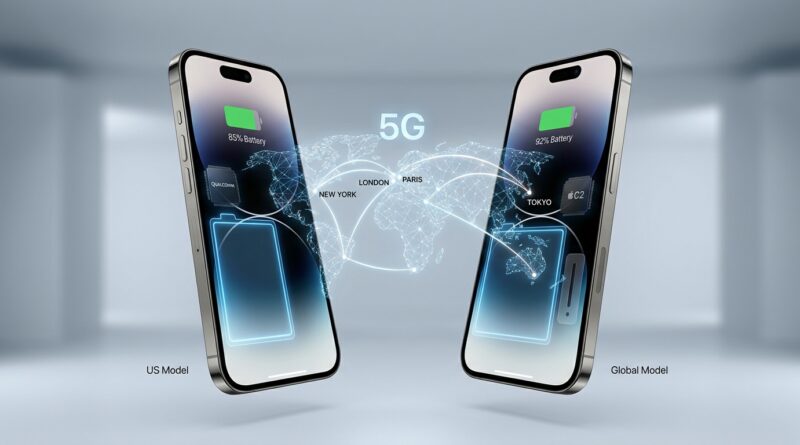
If you have ever bought an iPhone abroad, swapped SIMs at the airport, or kept a work and personal number on one phone, this new leak is the sort of thing that can come back to bite you. The fresh filing around the iPhone 18 Pro points to a 4,288 mAh battery in the US model, with a slightly smaller battery for some international versions. That sounds boring at first. It is not. The extra internal room may be one more clue that Apple is continuing, and possibly deepening, its US-only eSIM plan. In plain English, the iPhone 18 Pro eSIM only US battery leak suggests the biggest real-world change may not be speed or camera tricks. It may be that the exact same “iPhone 18 Pro” behaves very differently depending on where you buy it. For regular people, that affects setup, travel, carrier switching, and resale value a lot more than benchmark bragging rights.
⚡ In a Hurry? Key Takeaways
- The latest leak points to a larger 4,288 mAh battery in the US iPhone 18 Pro, which may reflect extra internal space from removing the physical SIM tray.
- If you travel, use two numbers, or buy phones overseas, check whether your carrier and destination support eSIM before upgrading.
- A US eSIM-only model could be less flexible for resale or international use, even if it is technically the same phone name.
Why this small battery leak matters more than it looks
Most early iPhone rumors obsess over chips. Faster this, smarter that. I get it. But for many people, the headache starts the moment they try to activate the phone.
This new filing is interesting because it hints that Apple may once again use the inside of the US model differently from the rest of the world. If the US iPhone 18 Pro gets a 4,288 mAh battery and the international version gets a slightly smaller one, that space difference has to come from somewhere.
One obvious suspect is the missing physical SIM tray.
Apple already pushed US iPhones into eSIM-only territory before. This leak does not scream that from the rooftops, but it quietly supports the idea that Apple is still treating the US as its test market for a tray-free future.
What the “eSIM-only” part actually means
A physical SIM is the tiny card you can pop out and move to another phone. An eSIM does the same basic job, but digitally. No tray. No card to swap.
That can be very convenient. You can activate a plan without waiting for a SIM in the mail. You can add a second line in software. You can switch carriers without hunting for a paperclip.
But only if your carrier handles eSIM well.
And that is the catch. Not every carrier does. Not every country does. Not every airport kiosk does. If you land somewhere and the local budget carrier only hands out physical SIM cards, a US eSIM-only phone can turn into a travel problem fast.
The battery clue hiding in plain sight
US model reportedly gets 4,288 mAh
The number itself is not huge news. A slightly bigger battery is always nice. The more useful question is why one region gets that battery size and another does not.
Phones are packed tightly inside. Tiny design changes matter. Removing a SIM tray does not suddenly create a second battery, but it can free up just enough room for Apple to rearrange parts and squeeze out a bit more capacity.
International version may stay a little different
If Apple keeps a physical tray in some markets, those phones may have slightly different internal layouts. That could explain why the battery sizes do not match exactly across regions.
So this is not just a battery story. It is a hardware strategy story.
Why buyers should care before preordering
The iPhone 18 Pro eSIM only US battery leak matters most for people who do not keep their phones in one simple setup for three straight years.
Travelers
If you travel internationally, physical SIMs are still often the easiest and cheapest option. A local shop can hand you one in two minutes. With eSIM, you need carrier support, a compatible plan, and often better timing.
Sometimes it works beautifully. Sometimes you are stuck on airport Wi-Fi trying to scan a QR code that never arrives.
Dual-SIM users
Lots of people carry two numbers now. One for work. One for family. Or one domestic line and one cheap travel line.
eSIM can actually be great for this. But if one of your needed carriers only supports physical SIM, your options shrink fast with a US-only tray-free model.
People who resell phones
This one gets overlooked. Buyers in some regions may prefer a phone with a physical SIM tray because it is more flexible. That can affect secondhand demand.
A US iPhone that is eSIM-only may still sell well in the US. Outside it, not always. If you upgrade every few years and count on trade-in or resale value, that matters.
Could Apple split modems by market too?
There is also growing talk that Apple may mix Qualcomm modems and its own C2 modem depending on model or region. If that happens, the buying advice gets even more practical.
Most people will never care what modem name is inside their phone. They will care if one version gets better carrier compatibility, stronger roaming support, or fewer weird activation issues.
This is why region-specific iPhones are becoming a bigger deal again. The phone name may be the same, but the experience may not be.
What this could look like in real life
Picture two people buying an “iPhone 18 Pro.” One buys in New York. One buys in Singapore or Europe.
The US buyer may get a slightly bigger battery, no SIM tray, and maybe a different modem setup.
The international buyer may get a physical SIM tray, a slightly smaller battery, and a different path for carrier support.
Same product name. Different trade-offs.
Should you avoid the US model?
Not necessarily. For a lot of people, a US eSIM-only iPhone is perfectly fine.
If your carrier is solid, you rarely travel, and you like the cleaner all-digital setup, it may be easier than dealing with physical SIM cards.
But if you do any of the following, stop and check first:
- You travel abroad more than once or twice a year.
- You rely on cheap prepaid local carriers.
- You use one line for work and another for personal use.
- You often buy or sell phones across borders.
- You switch carriers when better deals pop up.
Smart upgrade advice before launch day
1. Check your carrier’s eSIM support now
Do not assume. Go to your carrier’s site or ask support directly. Ask if they support eSIM on iPhone, line transfers, dual eSIM, and international roaming setup.
2. Think about your next trip, not just your next month
Many people buy a phone and only discover the eSIM issue at the airport six months later. Think ahead. If you visit countries where physical SIMs are common and cheap, flexibility still matters.
3. Ask what model your trade-in program prefers
Some trade-in programs treat all iPhones of the same generation the same. Private buyers do not. A tray-equipped model can be easier to sell in some places.
4. Wait for the exact model numbers
This is the boring step that saves money. Once Apple publishes official model numbers and regional specs, compare them before you click Buy.
At a Glance: Comparison
| Feature/Aspect | Details | Verdict |
|---|---|---|
| US battery filing | Leak points to a 4,288 mAh battery in the US iPhone 18 Pro, slightly larger than some global versions. | Small spec change, big clue about internal design choices. |
| SIM setup | US version is widely expected to keep or deepen eSIM-only design, while some regions may still get a physical SIM tray. | Best for convenience at home, less ideal for some travel and resale scenarios. |
| Possible modem split | Apple may use different modem suppliers by market, which could affect compatibility and roaming behavior. | Worth checking if you depend on specific carriers or travel often. |
Conclusion
The smart way to read this leak is not, “nice, maybe a slightly bigger battery.” It is, “Apple may be quietly making the US iPhone 18 Pro even more different from the rest of the world.” That is the real story. Most coverage today is drooling over 2nm benchmarks and camera buzzwords, but the practical headache for real people this cycle is how you activate, travel with, and resell an iPhone that may be eSIM only in some countries and still have a physical tray in others. By paying attention to the 4,288 mAh US filing, the smaller international battery, and the signs Apple could mix Qualcomm and its own C2 modem by market, you can avoid surprise roaming fees, broken dual-SIM plans, and weaker resale value later. If you plan to upgrade, do not just compare colors and storage. Compare where the phone was made for, too.