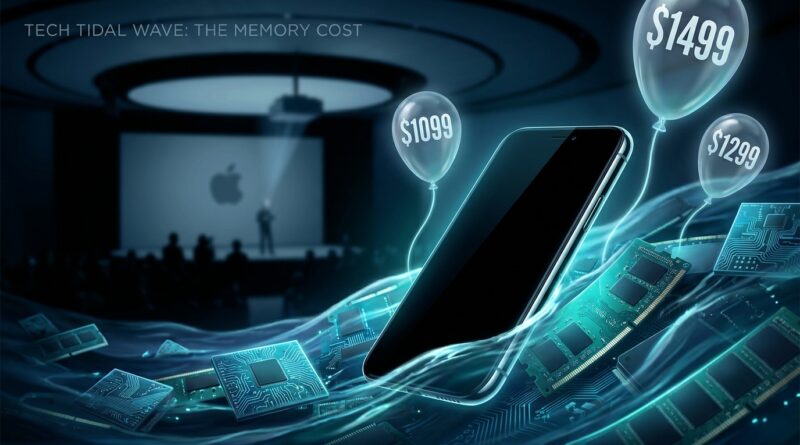
iPhone 18 Price Shock: The Silent RAM Crisis That Could Make Apple’s Next Flagship the Priciest iPhone Ever
If you were counting on Apple to keep iPhone pricing mostly familiar this year, I get why this rumor stings. A lot of people plan upgrades months ahead. They look at the last few launches, assume Apple will shuffle storage, add one flashy new feature, and keep the monthly payment close enough to swallow. But the iPhone 18 price hike RAM crisis may wreck that script. The quiet problem is memory. Not the kind you think about when your phone feels slow, but the actual RAM and storage parts Apple has to buy in huge volumes. Those parts are getting more expensive, and Apple has already shown its hand by raising Mac and iPad prices while pointing at memory costs. That matters because phones are next in line. So if you are eyeing an iPhone 18 in September, this is the moment to stop guessing and start planning, before trade-in values shift and carrier promos get worse.
⚡ In a Hurry? Key Takeaways
- The iPhone 18 could cost noticeably more if Apple passes rising RAM and storage costs on to buyers.
- If you plan to upgrade, watch trade-in deals early, compare carrier promos in summer, and avoid overpaying for storage tiers you do not need.
- Do not assume Apple will absorb the hit. Recent Mac and iPad increases suggest the company is more willing to charge you for memory inflation.
The quiet reason the iPhone 18 may get expensive fast
Most price jump stories focus on chips, tariffs, or fancy camera parts. Those are real. But memory is the sneaky cost that can spread across the whole lineup.
RAM helps your phone keep apps open, handle heavier multitasking, and run newer AI features without choking. Storage is where your photos, videos, apps, and system files live. When the cost of those parts rises, Apple has a few choices. It can eat the extra cost. It can cut somewhere else. Or it can raise prices.
Right now, the signs point to option three, at least for part of the lineup.
Why RAM matters more than it used to
For years, Apple could get away with selling phones that looked expensive but still felt predictable. The base model would come in at a familiar price. The real upsell happened when people jumped to more storage or picked the Pro model.
Now there is extra pressure. New software features, especially AI-heavy tools, need more memory headroom. Better cameras create bigger files. On-device processing is growing. So even if Apple wants to hold the line, it may not be able to keep low RAM configs around without making the phone feel compromised a year later.
That creates two problems for buyers
First, Apple may increase the starting price if the base hardware gets more RAM. Second, it may make the sweet spot model even pricier by nudging people into higher storage tiers.
That is how a phone gets more expensive without looking dramatically different on stage.
Apple has already given us a clue
This is the part many shoppers miss. Apple does not have to warn you about an iPhone increase directly. It can show you its pricing mood elsewhere first.
And it already has.
Recent price moves on Macs and iPads, with memory cost pressure cited as part of the story, make it harder to believe the iPhone will be protected. Apple is a master at segmenting products, but component inflation does not politely stop at the iPad shelf.
If memory pricing is biting across the lineup, the iPhone 18 price hike RAM crisis becomes less of a rumor and more of a pattern.
What this could look like in real money
No one outside Apple can give you final launch prices in June. But we can talk about how this usually lands.
Scenario 1. Base price goes up
The cleanest move is a direct increase. Maybe $50. Maybe $100. That sounds manageable until you add tax, AppleCare, and a case. Suddenly a modest bump turns into a painful checkout total.
Scenario 2. Storage tiers get reshuffled
Apple could keep the headline price close, then make the base model less appealing. For example, the starting storage may feel tight, or the RAM gap between standard and Pro may become harder to ignore. That nudges people upward.
Scenario 3. Carrier pricing hides the pain
This is the classic trick. Your monthly payment rises just enough that it does not feel dramatic. But over 24 or 36 months, you are paying much more than you expected.
That is why sticker price alone is not the whole story. Monthly cost is where most people get trapped.
Who should worry most
Not every buyer is equally exposed.
People on older phones with weak trade-in timing
If you are holding an iPhone 12 or 13 and hoping to trade in this fall, waiting too long could hurt. Trade-in values often soften as launch season gets closer and supply floods the market.
Buyers who always choose the middle storage option
This group gets squeezed the most. Apple knows many buyers do not want the cheapest model, but also cannot justify the maxed-out one. That middle tier is where margin lives.
Anyone expecting AI features on the cheapest model
If Apple makes a bigger deal out of on-device AI and multitasking, the low-end RAM setup may look less future-proof. That can push practical buyers into a more expensive version even if they do not care about premium cameras or titanium finishes.
What you should do now, before September
This is the useful part. You do not need to panic buy. But you should stop assuming the old pricing pattern will repeat.
1. Check your trade-in value now
Look at Apple, your carrier, and big retailers. Take screenshots. You are not locking anything in yet. You are building a baseline so you can spot a bad fall offer when it appears.
2. Decide how much storage you really use
Go into your current iPhone storage settings and look at the actual numbers. If you are using 95GB, paying a huge premium for 512GB may be silly. If you shoot lots of 4K video, the cheapest tier may be false savings.
3. Think about RAM as a longevity feature
Most people shop by camera and color. This year, memory may matter more. If one iPhone 18 model gets meaningfully more RAM, that could affect how smooth it feels two or three years from now.
4. Watch summer carrier promos
Carriers often start laying groundwork before launch. The best deals are not always on launch day. Sometimes the smartest move is clearing your current financing early or moving to a more favorable plan before the new phone arrives.
5. Be honest about whether you need the upgrade
If your current phone is healthy, this may be the year to skip. That is not exciting advice, but it is money-saving advice. A price jump hurts less if you buy every three or four years instead of every one or two.
Which tiers may be safest to avoid
Until specs are final, treat these as smart caution zones rather than hard rules.
The absolute base model, if RAM stays stingy
If Apple keeps the cheapest version on a lower memory setup, it may age faster. Fine today. Frustrating later.
The storage bump that feels “just in case”
Apple is brilliant at making the next storage tier feel responsible. But if your photos are already in iCloud and you do not shoot massive video files, that upgrade can be a pure profit move for Apple.
The Pro model bought only for fear
If you want Pro features, great. But do not let anxiety about future AI tools push you into a version that is hundreds more unless the RAM difference is clearly meaningful for your real use.
Why this matters for the iPhone rumor crowd right now
Because June is when smart buyers can still move. By September, the internet gets loud, the keynote glow kicks in, and people start making rushed decisions.
The big value in following the iPhone 18 price hike RAM crisis now is simple. You can set your budget early. You can decide whether a launch-day preorder still makes sense. You can plan around trade-ins instead of reacting to them. And you can avoid buying the wrong tier because Apple made the cheap one look weak on purpose.
At a Glance: Comparison
| Feature/Aspect | Details | Verdict |
|---|---|---|
| Likely pricing pressure | Rising RAM and storage component costs, plus Apple’s recent willingness to raise prices on other devices. | High chance of at least some iPhone 18 models costing more. |
| Best buyer move today | Track current trade-in values, review your storage use, and compare carrier upgrade terms before launch season hype starts. | Worth doing now if you may upgrade in September. |
| Risky assumption | Believing Apple will keep the same old starting price and simply absorb memory cost increases. | Do not count on it. |
Conclusion
The smart read here is not that the iPhone 18 is doomed to be absurdly priced. It is that the old safe assumption, Apple will somehow keep things close enough, no longer looks reliable. Apple has already raised Mac and iPad prices while pointing to soaring memory costs, and analysts increasingly expect the iPhone 18 lineup to feel that same squeeze. That makes this worth thinking about now, not after the keynote. If you plan ahead in June, you can decide whether a September upgrade is still worth it, which storage and RAM tiers are actually good value, and how to time trade-ins and carrier deals before everyone else wakes up to the fact that the next “future in your pocket” may come with a much steeper monthly bill.