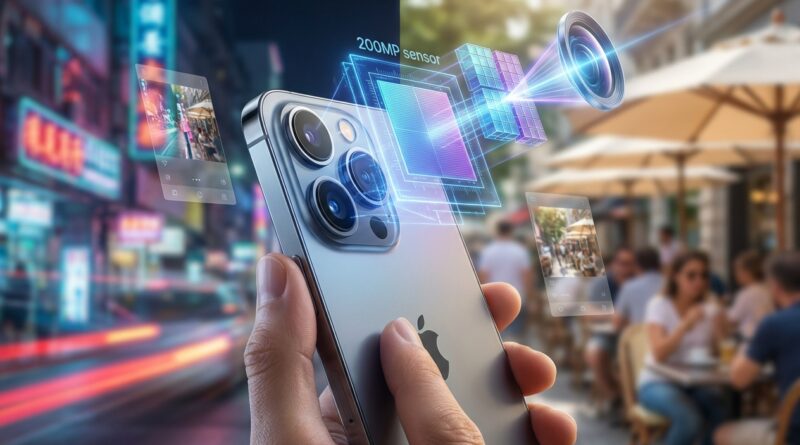
iPhone 18 Camera Hack: How a 200MP Sensor Leak Could Quietly Change Your Photos Forever
If you are squinting at yet another “200MP” leak and wondering whether your actual photos of your kids, dinner, pets, or a rainy street at night will look any better, you are not alone. This is where phone rumors get annoying fast. Big numbers sound impressive, but they often hide the real question. Will the next iPhone help you get a sharper, brighter, easier shot without making you work for it? The latest iPhone 18 200MP camera leak suggests Apple may be testing a much higher resolution main sensor for the iPhone 18 Pro line. That could matter. But probably not in the way TikTok headlines are selling it. A 200MP sensor does not automatically mean photos that look four times better. What it can mean is more detail, smarter cropping, and better zoom flexibility, if Apple pairs it with the right sensor size, pixel binning, image processing, and low-light tuning. That is the part worth paying attention to.
⚡ In a Hurry? Key Takeaways
- A 200MP iPhone camera could improve detail and cropping, but it will not magically make every photo look dramatically better.
- If you mostly shoot in daylight and like to crop after the fact, this leak is worth watching. If you care most about night shots and natural skin tones, software and sensor size matter more than megapixels alone.
- Do not buy or skip an upgrade based on “200MP” by itself. Wait for proof on low light, shutter speed, and everyday photo consistency.
What the iPhone 18 200MP camera leak actually means
The headline number sounds simple. It is not.
A 200-megapixel sensor captures a lot more raw image data than a 48MP sensor. In plain English, that means the camera has the potential to record much finer detail. If you zoom in on brick, hair, tree leaves, fabric, or faraway signs, there is more information to work with.
But phone cameras do not usually save full-resolution 200MP photos every time you tap the shutter. That would be slow, huge in file size, and often worse in lower light. What normally happens is something called pixel binning.
Pixel binning, minus the jargon headache
Think of a 200MP sensor like a giant grid of tiny light buckets. Tiny buckets can capture detail, but each one gathers less light on its own. To fix that, the phone combines groups of pixels into larger virtual pixels.
So instead of giving you a 200MP photo all the time, Apple could use that sensor to produce a 12MP or 24MP or 50MP image that is cleaner and brighter. You still get some of the detail benefits, but with better light capture and less noise.
That is why the iPhone 18 200MP camera leak is interesting. Not because you will suddenly print billboards, but because Apple could use the extra resolution to make normal photos more flexible.
What would actually improve in everyday photos?
1. Better crop freedom
This is the most likely real-world benefit.
If you take a photo of your kid on a soccer field, your dog across the yard, or a skyline from a rooftop, a high-resolution sensor gives the phone more room to crop in without the image falling apart so quickly. Even if you never think about “megapixels,” you may notice that zoomed or cropped shots hold together better.
That matters because a lot of people do not use the camera exactly as shot. They straighten, crop, and repost. More detail gives you more editing room.
2. Cleaner “digital zoom” between lenses
Phones are at their best at the exact focal lengths their hardware supports. Everything in between can get messy. A 200MP sensor could let Apple do much better sensor cropping for intermediate zoom levels, especially between 1x and 3x or 5x.
So instead of a mushy in-between zoom, you could get a crisper result by cropping from the main sensor. This is one of the quieter ways a camera can feel better, even if you never open the settings.
3. Potentially better daylight detail
Food photos by a window. Vacation architecture. Street scenes. Landscapes. These are the situations where a higher-resolution sensor can shine.
In good light, the phone has enough information to keep textures looking more natural instead of smeared or overly sharpened. If Apple gets the processing right, your photos could look more lifelike, not just “sharper.”
4. Maybe better low light, but this is where hype goes off the rails
This is the part most rumor posts skip.
A 200MP sensor does not automatically mean better night photos. In fact, if the individual pixels are very small and the sensor is not physically larger, low-light performance can suffer unless the software is excellent.
Apple would need to balance several things at once. Sensor size. Lens quality. image processing. Stabilization. Exposure speed. Noise reduction. Skin tone handling. Highlights from street lamps. Motion blur from a moving subject.
If Apple nails those, great. If not, you may get more detail on static night scenes but worse photos of moving people at dinner. That is why “200MP” on its own is not the answer.
What Apple is probably trying to do
Apple usually does not chase specs just to win a numbers game. When it adopts a bigger number, it tends to tie it to a practical trick.
With a 200MP main sensor, the likely goals would be:
- better crop-based zoom
- higher detail in bright scenes
- more flexible ProRAW capture
- better computational photography options from one sensor
- future-proofing for spatial, AI-assisted, or post-capture reframing tools
That last point matters more than people think. Apple loves features that quietly work in the background. A bigger sensor data pool could feed smarter automatic edits, better subject separation, or cleaner reframing after the shot.
Who would notice the upgrade most?
You will probably notice if you:
- crop photos a lot after taking them
- shoot travel, architecture, pets, or kids outdoors
- care about detail when zooming in later
- use ProRAW or edit photos more heavily
- often wish your 1x camera could fake a cleaner 2x or 3x shot
You may not notice much if you:
- mostly post to Instagram, Snapchat, or TikTok where images get compressed anyway
- take quick indoor photos in mixed lighting
- care more about color, skin tones, and motion capture than fine detail
- rarely zoom or crop
This is the key upgrade filter. Ask how you shoot now, not how the keynote says you should shoot.
The catch nobody likes talking about
There are trade-offs.
File sizes could grow
If Apple lets users shoot at full 200MP in some modes, those files could be massive. That means more storage use, slower transfers, and potentially more heat during long shooting sessions.
Processing could get more aggressive
More data is not always better if the software overcorrects it. One of the most common complaints in modern phone photography is that pictures can look too processed. Grass gets crunchy. Faces get waxy. Night shots look fake.
If Apple pushes too hard for “wow” detail, images may end up looking less natural. So the real test is not whether the phone can capture more. It is whether it knows when to hold back.
Lens quality still matters
A sensor can only record what the lens delivers. If the optics are not up to the task, a higher megapixel count can expose flaws just as easily as it captures detail.
Should you wait for the iPhone 18 or buy the iPhone 17?
Here is the practical framework.
Wait for the iPhone 18 if:
- you keep your phones for several years
- camera quality is your main reason to upgrade
- you care about cropping, zoom flexibility, and future camera features
- your current phone is still fine for another year
Buy the iPhone 17 if:
- you need a new phone sooner rather than later
- your current iPhone already struggles with battery, performance, or storage
- you want a safer bet instead of waiting on an unconfirmed leak
- you care more about steady all-around camera performance than headline specs
If your current phone is an iPhone 14 Pro, 15 Pro, or newer, I would not make a decision based on the iPhone 18 200MP camera leak alone. That is too early, and too many variables are still missing.
If you are on an older iPhone and mostly want a reliable camera jump, the iPhone 17 may already be enough. A rumored 200MP sensor could be a big deal, but it could also end up being one feature buried inside a camera system that only feels modestly better in daily use.
What to watch for next in the rumor cycle
Ignore raw megapixel chatter and look for these details instead:
- the physical size of the sensor
- whether Apple uses 12MP, 24MP, 48MP, or 50MP default output
- night mode improvements
- motion handling for moving subjects
- how 2x and 3x crop zoom compares to today’s models
- whether ProRAW files become meaningfully better
- whether the lens aperture or stabilization changes too
Those are the clues that tell you if this is a real camera leap or just a nice-looking spec sheet.
My honest read on the leak
The iPhone 18 200MP camera leak sounds believable because the rest of the phone industry has already shown where high-resolution sensors can help. Apple is not likely to copy the feature just for bragging rights. It would want a polished use case.
Still, leaks at this stage often miss the most important part. Execution.
A badly tuned 200MP camera can be less satisfying than a beautifully tuned 48MP one. What most people want is simple. Less blur. Better skin tones. Cleaner night shots. More reliable focus. Sharper zoom when the moment is already happening.
If a 200MP sensor helps Apple do that, great. If not, it is just another big number in a keynote slide.
At a Glance: Comparison
| Feature/Aspect | Details | Verdict |
|---|---|---|
| Daylight detail | A 200MP sensor could capture more fine texture and give you more room to crop without losing quality as quickly. | Likely real benefit, especially for travel, food, and outdoor shots. |
| Low-light photos | Results depend on sensor size, pixel binning, processing, and stabilization, not megapixels alone. | Too early to trust the hype. Wait for real tests. |
| Upgrade value | Best for people who crop often, zoom between lenses, or keep phones for years. Less important for casual social posts. | Promising, but not enough by itself to justify waiting or upgrading. |
Conclusion
The smart way to read the iPhone 18 200MP camera leak is to treat it as a clue, not a promise. Yes, it could quietly change your photos forever, but only if Apple uses that extra resolution to improve the shots you actually take every day, not just the sample images shown on stage. This helps the community right now because TikTok clips and forum posts keep repeating “200MP” like it settles the argument, when it really does not. What matters is whether the next iPhone handles friends at dinner, food in bad restaurant lighting, and night city shots better than the phone already in your pocket. If you use that filter, you can cut through the clickbait, decide whether waiting makes sense, and call out shallow rumor coverage when you see it. That is the real win.