How to Read Today’s iPhone 17 Battery Leaks Like a Teardown Expert
If your eyes glaze over every time a leak says “stacked battery” or “metal battery housing,” you are not alone. A lot of iPhone rumor talk sounds like it was written for engineers, not normal people trying to figure out one simple thing. Will the next iPhone last longer, run cooler, and be worth waiting for? That is the real question. The short version is this. These iPhone 17 battery leaks matter, but not always in the dramatic way social posts make it sound. “Stacked” usually points to better energy density and possibly longer battery life in the same space. A metal battery shell can help with heat control and durability. And if the Pro Max really does get a thicker body, that could be the most practical battery upgrade of all, because extra physical room often beats clever marketing terms. So let’s decode the leaks like a teardown expert, minus the jargon and the headache.
⚡ In a Hurry? Key Takeaways
- “Stacked battery” does not mean a miracle jump. It usually means Apple may fit more usable battery into the same space and manage heat a bit better.
- If you care most about battery life, watch the iPhone 17 Pro Max leaks closely. A thicker chassis could matter more than buzzwords.
- Do not upgrade based on one leak alone. Real battery value comes from the mix of battery size, chip efficiency, cooling, and display power use.
What the iPhone 17 stacked battery leak explained really means
Let’s translate the phrase into plain English.
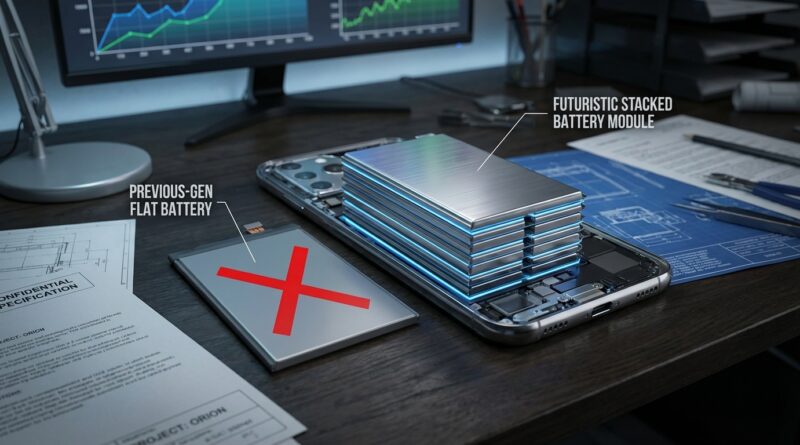
A stacked battery is a battery design that packs layers more efficiently inside the phone. Think of it like reorganizing a suitcase so you can fit more without making the suitcase much bigger. You are not magically creating power out of nowhere. You are just using the available space better.
That can lead to a few useful benefits. First, Apple may be able to increase battery capacity without making the phone much larger. Second, a more advanced battery layout can sometimes improve heat behavior during charging and heavy use. Third, it may help long-term battery health if the whole system is designed well.
The important part is this. Stacked battery tech by itself is not the full story. A phone with a slightly bigger traditional battery can still beat a phone with a clever stacked battery if the chip, modem, and screen are more efficient.
Why people keep talking about metal battery housings
This is another term that sounds more dramatic than it needs to be.
A metal battery housing means the battery pack is wrapped or enclosed in a more rigid metal shell rather than the softer pouch style people are used to hearing about. In theory, this can help with heat dissipation, structural stability, and repair handling. If a battery can move heat away more effectively, the phone may stay a bit cooler under stress. Cooler batteries are generally happier batteries.
That does not mean your iPhone 17 will suddenly feel ice cold during gaming or fast charging. It means Apple may be trying to control hot spots better, which can help performance consistency and battery wear over time.
For regular users, the benefit is less about a wow moment and more about fewer annoying moments. Less heat throttling. Less long-term battery stress. Potentially steadier battery health after a year or two.
Why teardown experts care about thickness more than marketing names
This is the part that often gets lost in rumor season.
If the iPhone 17 Pro Max gets a thicker chassis, that could be a bigger real-world battery story than either “stacked” or “metal shell.” Phones are bound by physics. More internal volume often means more battery capacity. More battery capacity usually means more screen-on time, assuming Apple does not give all that extra room to cameras or cooling.
Teardown people look at space first because space is honest. If a phone is thicker, there is at least a chance Apple used that room for a larger cell. Fancy battery architecture is helpful, but extra room is still one of the simplest ways to improve endurance.
So if you are deciding whether to wait, keep your eye on dimensions as much as battery leak language.
What these leaks could mean for real-world battery life
For screen-on time
This is what most people care about. Can you get through the day without hunting for a charger?
If Apple combines stacked battery design, a slightly larger battery, and a more efficient chip, yes, you could see a noticeable gain. Not a two-day revolution for most people, but maybe the kind of jump that gives you one or two extra hours of mixed use. That is meaningful. It is the difference between ending the day at 8 percent and 22 percent.
For heat
Heat is the hidden battery killer. It affects comfort, charging speed, and long-term battery health. A metal battery housing could help spread heat better. Better internal layout could help too. But a powerful chip, bright display, and 5G use can still make any phone warm.
So the smart expectation is improved heat management, not total heat removal.
For battery lifespan
Long-term battery health depends on repeated charge cycles, temperature, and software charging controls. If Apple improves thermal control and charging behavior, that can help the battery keep more of its capacity over time.
This matters if you keep your phone for three or four years. You may not notice it on day one, but you will notice it after hundreds of charges.
Should you wait for iPhone 17 or buy now?
Here is the practical answer.
Wait if battery life is your top priority
If your current iPhone is basically fine but you are tired of midday charging, waiting makes sense. The iPhone 17 line appears to be one of those generations where several battery-related changes may land at once. That does not guarantee a huge leap, but it raises the odds of a meaningful one.
Buy now if your current phone is already struggling
If your battery health is poor, your phone overheats, or it can barely make it through work, do not trap yourself in rumor limbo. Battery leaks are not batteries in your hand. You can always wait forever for the next thing.
Hold out specifically for the Pro Max if endurance matters most
Historically, the biggest iPhone tends to win on battery life. If the iPhone 17 Pro Max gets a thicker body on top of these battery changes, it may end up being the safest pick for heavy users.
How to read leaks like a teardown expert
You do not need an engineering degree. Just ask these four questions.
1. Is the battery actually bigger?
If no capacity number leaks, be careful. “New battery tech” with no size increase may bring only small gains.
2. Is the phone thicker or heavier?
That can be a clue that Apple added more battery, more cooling, or both.
3. What chip and modem is it using?
Battery life is not just battery size. Efficient silicon can make a huge difference.
4. Is the leak about charging, heat, or capacity?
People often mix these up. Better heat management does not always mean longer battery life. Faster charging does not always mean better battery health. And bigger capacity does not always mean the phone lasts longer if the display uses more power.
What not to assume from these rumors
There are a few common mistakes people make every year.
First, do not assume “stacked battery” means a giant battery increase. It may be modest.
Second, do not assume “metal housing” means a safer battery in every possible situation. It can help structurally and thermally, but battery safety depends on the full design.
Third, do not assume all iPhone 17 models will benefit equally. Apple often saves the most interesting hardware changes for Pro models or the biggest model.
And finally, do not let one exciting leak outweigh your current needs. If your phone works fine, waiting is easy. If your phone is failing every day, the best upgrade is often the one that solves your problem now.
Best advice for different kinds of buyers
If you upgrade every year
You can relax. These battery leaks are interesting, but they are not the kind of thing that should cause panic buying or panic waiting.
If you keep phones for 3 to 5 years
This is where the rumors matter more. Better battery design and heat control can make a bigger difference over the long run than on launch week.
If you are choosing between Pro and Pro Max
Battery life alone may push you toward the Pro Max this year if the thickness rumor is true.
If you hate bulky phones
Do not chase battery specs at any cost. A slightly smaller phone you enjoy using is often the better buy than a battery monster that feels like a brick in your pocket.
At a Glance: Comparison
| Feature/Aspect | Details | Verdict |
|---|---|---|
| Stacked battery | More efficient internal battery layout that may improve capacity and heat behavior in the same space | Promising, but expect a steady gain, not a miracle |
| Metal battery housing | Could help spread heat and add structural stability around the battery pack | Most useful for heat and long-term durability, less flashy day to day |
| Thicker Pro Max chassis | Extra internal room could allow a larger battery and possibly better cooling | This may be the biggest real-world battery story if confirmed |
Conclusion
The smart way to read today’s battery leaks is to stay calm and look for the boring details. They are usually the ones that matter most. Battery rumors are exploding right now because the iPhone 17 line seems to be where stacked battery tech, a thicker Pro Max body, and possible metal-shelled packs all meet. That sounds technical, but the real takeaway is simple. You are looking for better heat control, healthier battery aging, and more usable hours between charges. If your current phone is still doing the job, waiting for clearer iPhone 17 details is reasonable. If your battery is already making your life harder, you do not need to put your upgrade on hold for every rumor wave. Either way, you now know how to read these leaks like a teardown expert. Not by chasing hype, but by focusing on what actually changes your day.